Yes, let a prospective buyer test drive your car — but only after you've done three things: verified their government-issued photo ID, confirmed insurance coverage, and agreed on a route. If a buyer refuses any of those checks, the viewing ends there. That's the whole framework. Everything below is how to execute it.
Before you hand over the keys, run through this pre-drive checklist:
- Verify a government-issued photo ID and photograph it for your records. Don't proceed if the buyer refuses.
- Confirm insurance coverage. Your personal auto policy may not cover a test driver, so ask the buyer to show proof their policy covers your vehicle or to purchase short-term coverage.
- Choose a public meeting place with good lighting and foot traffic.
- Ride along in the passenger seat. Keep the spare key in your pocket.
- Document everything: buyer's name, license plate, time of arrival, and a timestamped photo of the car.
Walk away immediately if the buyer shows no ID, carries no insurance proof, or insists on driving alone without explanation.
Pro Tip: Text a friend the buyer's name, plate number, and your meeting location before you leave the house. Takes 30 seconds and gives you a safety net.
Key Takeaways
Screening buyers before a test drive protects your car, your safety, and your legal position — and a serious buyer will never object to the process.
| Point | Details |
|---|---|
| Verify ID before anything else | Photograph the buyer's government-issued ID and confirm the photo matches the person present. |
| Confirm insurance coverage | Your personal policy may not cover a test driver; ask the buyer to show proof or buy short-term coverage. |
| Plan and pre-agree the route | A 15–20 minute route starting and ending in a public place prevents unauthorized diversions. |
| Ride along and keep the spare key | Stay in the passenger seat and keep the spare key in your pocket throughout the drive. |
| Document condition before the drive | Timestamped photos of all four corners and the odometer are your primary defense against damage disputes. |
Table of Contents
- How to plan a short, safe test-drive route before you meet
- How to screen buyers thoroughly before you schedule a test drive
- Where to meet, who to bring, and immediate personal-safety steps
- How to prepare the car and document its condition before the drive
- Should you ride along or let the buyer drive alone?
- Safety tips, common scams, and red flags to watch for
- What buyers inspect on a test drive, and how to guide it well
- How to verify IDs and low-cost prescreen options for private sellers
- How to handle test drives with multiple prospective buyers
- How to verify a buyer's intent and ability to purchase
- What documents to carry during a test drive beyond ID and registration
- What to do if a buyer causes damage or an accident during the test drive
- What to do if a buyer wants to take the car out of the local area
- Legal considerations and disclaimers sellers can use
- What one organized viewing actually looks like
- Sources
How to plan a short, safe test-drive route before you meet
Route planning is one of the most overlooked steps in the vehicle test drive process. A good route starts and ends in a public place, runs for a short duration, and covers both low-speed handling and a short stretch of faster road so the buyer can evaluate brakes, steering, and transmission without you needing to go far.
Build the route in advance and share it with the buyer before they arrive. That single step removes the most common pressure tactic: "Can we just go a bit further?" When the route is pre-agreed, any deviation is a red flag, not a negotiation.
Your route checklist:
- Start and end at a busy, well-lit public location (a shopping center lot, a gas station, a bank branch).
- Include a low-speed residential or commercial stretch for handling checks.
- Include one section of road with a moderate speed limit so brakes and acceleration can be tested safely.
- Avoid dead-end streets, industrial areas, or any road with no easy pull-off.
- Keep total drive time under 20 minutes.
Pro Tip: Tell someone your planned route and set a check-in time. If you haven't messaged them by the agreed time, they call you.
How to screen buyers thoroughly before you schedule a test drive
The buyer screening test drive process starts before anyone shows up. A quick phone call or message exchange tells you more than most sellers realize. Ask directly: What's your timeline? How are you planning to pay? What's your full name and a number I can call back on? Evasive answers to any of those are worth noting.
Ask for these before confirming the appointment:
- Full legal name and a callback number (call it back to verify it's real).
- A photo of their driver's license sent in advance.
- Their general location or zip code.
- Stated payment method (cash, bank transfer, financing).
Verify what you can. A quick search of the name against the phone number or a light social profile check takes two minutes. You're not running a background investigation; you're confirming the person is who they say they are.
Red flags that should cancel the appointment outright: the buyer won't give a last name, the phone number doesn't match any traceable account, they push to meet somewhere isolated, or they insist on driving without you present. A serious buyer has no reason to resist basic car buyer screening steps.
Where to meet, who to bring, and immediate personal-safety steps
Never meet a buyer at your home address if you can avoid it. A busy parking lot with visible CCTV, a gas station forecourt, or a commercial strip with foot traffic all work well. If the car is too large to move easily or you must meet at home, keep another person present and restrict the buyer to the driveway.
Safety checklist for the meeting:
- Bring a friend or family member. Their presence alone deters most bad actors.
- Keep your phone charged and in your pocket, not left in the car.
- Never let the buyer into your home, even to use the bathroom.
- If a buyer arrives late and wants to change the location, treat that as a yellow flag. Confirm the new location is still public before agreeing.
- When managing multiple buyers in a day, stagger appointments by at least 45 minutes so viewings don't overlap and you're never outnumbered.
For multiple prospective buyers, keep a simple log: name, appointment time, plate number. If two buyers show up simultaneously, ask one to wait in their own vehicle. You control the pace.
How to prepare the car and document its condition before the drive
Remove everything personal from the car before the buyer arrives. That means documents, garage openers, spare keys, and any valuables in the center console or door pockets. Lock the glovebox unless you need to show the registration. Keep the title and service records in a folder you hold, not left on the seat.
Then photograph the car:
- All four exterior corners, including any existing scratches or dents.
- The interior, dashboard, and odometer reading.
- Any known cosmetic damage, clearly lit.
Take these photos with your phone so they carry an automatic timestamp. Back them up to cloud storage before the buyer arrives. For high-quality documentation that holds up in a dispute, clear lighting and multiple angles matter more than camera quality.
Ask the buyer to photograph their ID against a plain background when they arrive and note the plate number of the vehicle they drove to the meeting. Keep that record separate from the car.
Should you ride along or let the buyer drive alone?
Ride along. That's the short answer. Sitting in the passenger seat gives you control of the route, lets you answer questions in real time, and means you're present if anything goes wrong. Letting a buyer drive alone introduces theft risk, increases your liability exposure if their insurance situation is unclear, and removes your ability to document an incident as it happens.
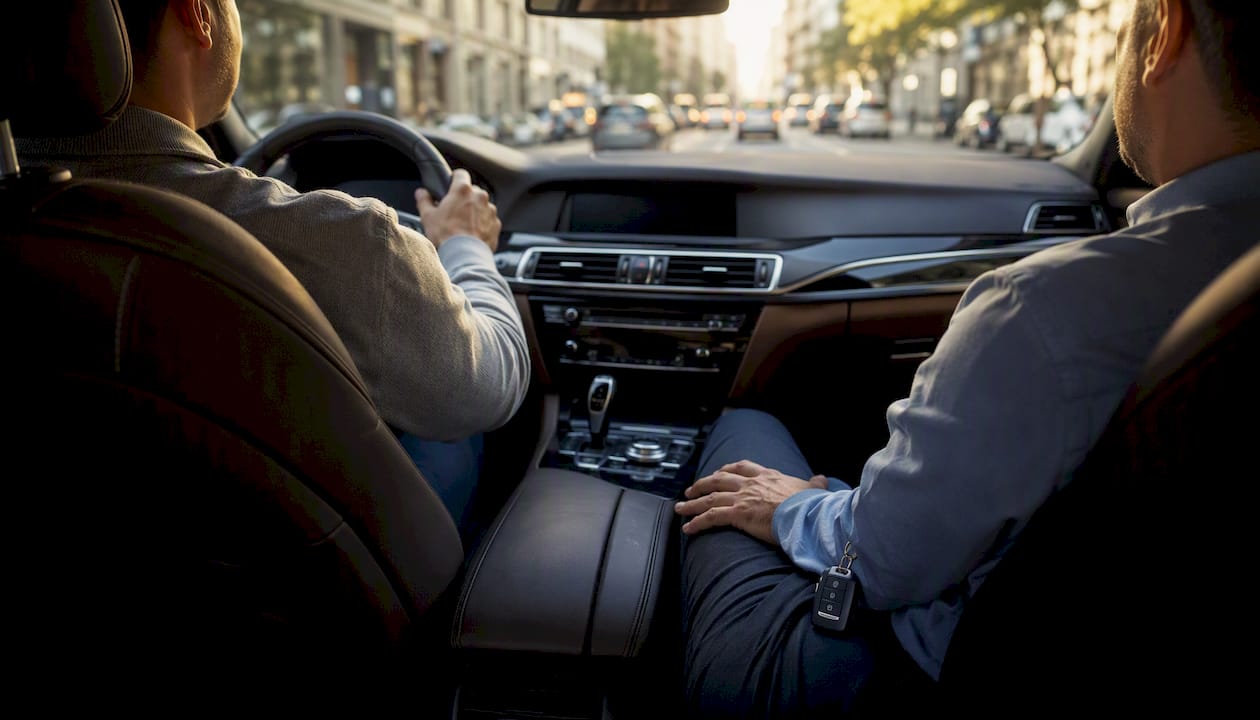
If a buyer genuinely needs a moment alone in the car to assess comfort (some do, legitimately), stay in the parking lot and let them do a slow loop, not a road drive.
If circumstances require you to let them drive unaccompanied:
- Keep the spare key in your possession before they start.
- Photograph the buyer's ID against the car.
- Confirm their insurance policy covers your vehicle registration specifically.
- Set a firm return time and a specific route, in writing.
- Stay at the meeting location; do not leave.
A short permission script you can say or text: "Before we start, I need to see your driver's license and proof that your insurance covers this vehicle. I'll be riding along for the full drive. The route is [X], and we'll be back in 15 minutes."
Pro Tip: Keep the spare key in your front pocket, not your bag. If a buyer drives off, you want to be able to call the police immediately with the plate number and a clear description, not be searching for a key.
Safety tips, common scams, and red flags to watch for
The test drive is the highest-risk moment in a private sale. Most drive-away scams follow a predictable pattern: the buyer builds rapport, creates a small distraction (a question about the engine, a phone call), and either drives off or swaps the key for a copy. Knowing the pattern is most of the defense.
Common scams to recognize:
- False ID: A buyer presents a convincing but fake license. Photograph it and check that the photo matches the person in front of you.
- The "quick check" that becomes a drive-away: Buyer asks to "just feel the steering" and doesn't return. Never let anyone behind the wheel without completing ID and insurance checks first.
- Overpayment or fake escrow: Buyer offers to pay more than asking price via a third-party service. Legitimate buyers don't do this.
- Cash with distraction: A buyer counts out cash while an accomplice distracts you. Count money yourself, away from the car.
Red flags that should end the viewing immediately: buyer refuses to show ID, proposes a long-distance drive without you, pushes unusual payment arrangements, or rushes you to sign anything before the drive.
For payment, accept bank transfers verified by your bank, cashier's checks verified at the issuing bank branch, or cleared funds. Never accept personal checks or third-party payment apps for a vehicle sale.
If something goes wrong during the drive: call the police immediately, note the plate number, and contact your insurer. Your timestamped photos are your primary evidence.
What buyers inspect on a test drive, and how to guide it well
Buyers use the drive to check six things: brakes, steering feel, engine and transmission behavior, unusual noises, electronics, and HVAC. A well-structured 15-minute drive covers all of them without you losing control of the route.
A practical test-drive sequence:
- Startup and idle: Let the buyer start the car and listen for a minute. Point out any known quirks so they don't become post-sale disputes.
- Low-speed handling: A residential or parking-lot loop at 10–20 mph. Ask them to turn the wheel lock-to-lock once to check steering.
- Acceleration and braking: A short stretch where they can accelerate to 35–40 mph and brake firmly. One controlled stop is enough.
- Highway or faster road (where legal and safe): 60 seconds at highway speed to check transmission behavior and road noise.
- Electronics and HVAC: Back in the lot, run through the infotainment, climate control, and any driver-assist features.
- Walk-around: Exit the car together and walk the exterior. This is when buyers raise questions about condition — answer honestly to avoid post-sale disputes.
Buyers also evaluate sight lines and dashboard visibility, so let them adjust the seat and mirrors before moving. Cue specific maneuvers rather than letting the drive wander: "Go ahead and brake firmly here" is better than waiting for them to find the right moment.
How to verify IDs and low-cost prescreen options for private sellers
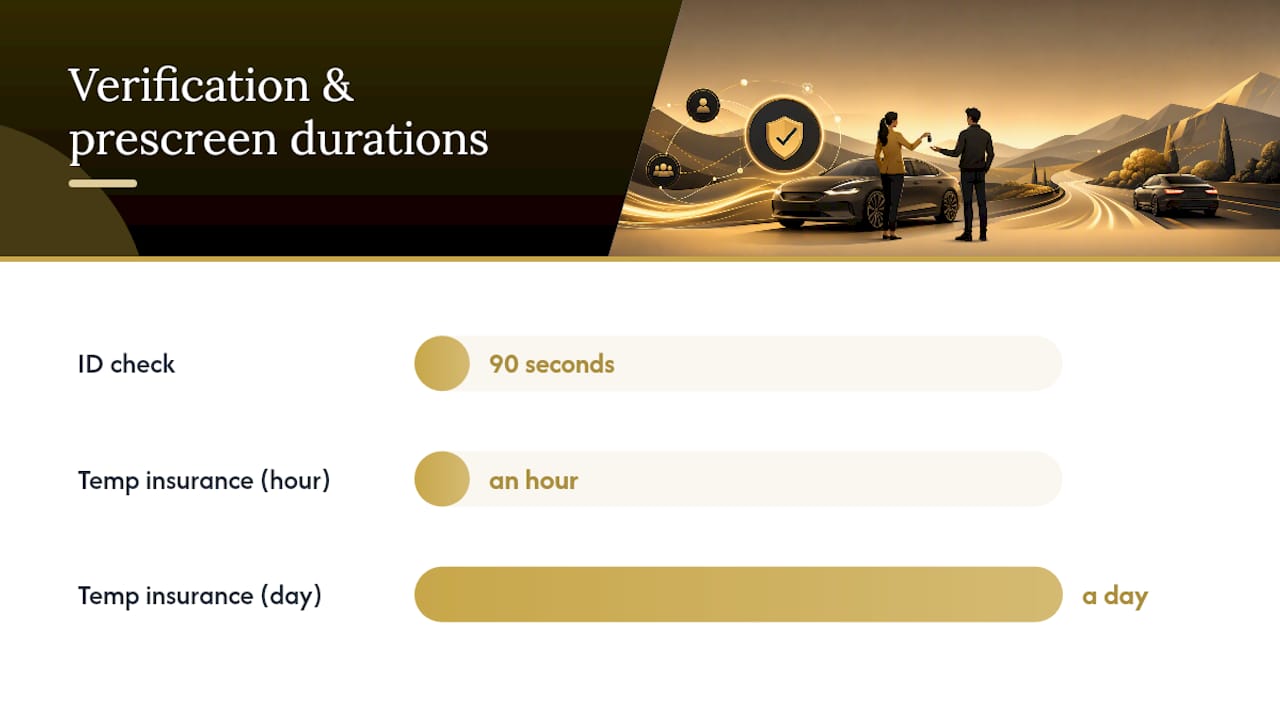
The fastest ID check a private seller can run is also the most effective: photograph the license, compare the photo to the person standing in front of you, and check that the expiration date is current. That takes 90 seconds and creates a dated record.
For insurance, most private auto policies limit coverage to named or listed drivers. Short-term insurance apps let buyers add your vehicle registration for an hour or a day; asking them to show the confirmation email before the engine starts moves claim exposure off your personal policy. In the U.S., providers offering short-term or non-owner coverage include options buyers can purchase directly through apps or insurance brokers before arriving.
Practical prescreen options for private sellers:
- Ask for a bank transfer screenshot showing available funds (blurred account number is fine).
- Request a buyer-arranged temporary insurance confirmation email listing your vehicle's VIN or plate.
- Ask for a brief written prequalification note from their lender if they're financing.
Dealers use tools like ID Drive from 700Credit to scan licenses and run synthetic-ID checks, and QuickScreen to pull a soft-credit view showing a buyer's FICO range without a hard inquiry. Private sellers can't run those directly, but understanding the workflow helps: ID first, then financial verification. That order matters because a verified identity makes any financial check more reliable.
How to handle test drives with multiple prospective buyers
Running back-to-back viewings in a single day is common, and it's manageable with a simple system. Schedule appointments at least 45 minutes apart. That gap gives you time to reset the car, review your notes, and avoid the awkward situation of two buyers arriving simultaneously.
Keep a running log for each appointment: buyer's name, contact number, plate number of their vehicle, arrival time, and departure time. A notes app or a simple paper sheet works fine. If a buyer cancels or reschedules, note that too. Patterns matter: a buyer who reschedules twice and then asks to meet somewhere new is showing you something.
Never let one buyer's enthusiasm pressure you into skipping checks for the next. Each viewing is independent. The car is still yours until funds clear and paperwork is signed.
How to verify a buyer's intent and ability to purchase
A test drive is a strong buying signal, but intent and ability are two different things. Someone who loves the car and can't afford it wastes your afternoon. A quick conversation before the appointment filters most of that out.
Ask directly: "How are you planning to pay, and what's your timeline?" A buyer who says "cash within the week" and can show a bank statement screenshot is different from one who says "I'm still figuring out financing." Neither answer disqualifies them, but it tells you how to prioritize follow-up.
For pre-qualifying car buyers, the simplest private-seller version is: ask for proof of funds or a lender prequalification letter before the test drive. You don't need to run a credit check. A screenshot of a bank balance (with the account number obscured) or a one-page prequalification note from a lender is enough to confirm the buyer is serious.
If a buyer is financing, ask which lender they're working with and whether they've been prequalified. That question alone separates window shoppers from real buyers.
What documents to carry during a test drive beyond ID and registration
Your registration and ID are the minimum. Bring more:
- A bill of sale template (pre-filled with your vehicle's year, make, model, VIN, and asking price). Having it ready signals professionalism and speeds the close if the buyer wants to move that day. The car sale paperwork checklist covers what a complete private-sale document set looks like.
- A test-drive acknowledgment form: A short statement the buyer signs confirming they've seen the car's current condition, they hold valid insurance, and they accept responsibility for any damage caused during the drive. One page, plain language.
- Emergency contact info: Your insurer's claims number and the non-emergency police line for your area, saved in your phone and written on a card in your wallet.
- Service records: Originals stay home. Bring photocopies or photos on your phone.
A buyer who sees you arrive organized is less likely to try to negotiate aggressively or fabricate a damage claim later.
What to do if a buyer causes damage or an accident during the test drive
Stay calm and document everything before the car moves again. Take photos of the damage immediately, with the buyer present. Note the time, location, and what happened in as much detail as you can.
Then:
- Call your insurer and report the incident. Give them the buyer's name, license number, and insurance details.
- If the buyer has temporary or short-term insurance covering your vehicle, contact that insurer as well.
- If the damage is significant or there's a dispute, call the police and file a report. A police report number is useful for insurance claims and any later legal action.
- Do not let the buyer leave until you have their full contact information and insurance details in writing.
Your pre-drive photos are critical here. They establish the car's condition before the buyer touched it, which is your primary defense against any claim that damage was pre-existing.
What to do if a buyer wants to take the car out of the local area
Decline. A test drive does not require leaving your city or county. Any buyer who insists on a long-distance drive before purchase is either testing your boundaries or planning something worse.
If a buyer has a genuine reason (they live an hour away and want to test highway behavior), the right answer is: meet them at a location near a highway in your area, run the drive together, and return to your starting point. You set the geography, not them.
Never agree to a drive that takes the car across state lines. Your insurance coverage, registration, and legal jurisdiction all change at that point, and recovering a vehicle from another state is expensive and slow.
Legal considerations and disclaimers sellers can use
A short written disclaimer doesn't replace legal advice, but it creates a paper trail. Before any test drive, have the buyer sign or acknowledge (by text message, which is timestamped) a statement that includes:
- They hold a valid driver's license and active insurance covering the vehicle.
- They accept responsibility for any damage caused during the test drive.
- The vehicle is sold as-is, and the test drive does not constitute a warranty.
In most U.S. states, private vehicle sales are sold "as-is" by default, but stating it explicitly in writing removes ambiguity. The Federal Trade Commission's guidance on used car sales and your state's DMV website are the right places to confirm what disclosures your state requires.
Keep a copy of any signed document or screenshot of a text acknowledgment. This is general information, not legal advice; confirm current requirements with your state's DMV or a licensed attorney before the sale.
What one organized viewing actually looks like
One viewing stands out in memory: a buyer arrived on time, handed over his license before being asked, and pulled up his insurance app to show coverage on his phone. The whole pre-drive check took four minutes. The drive went smoothly because the route was pre-agreed and he knew exactly what he was there to evaluate. He made an offer before we got back to the starting point.
The lesson isn't that good buyers are rare. It's that having a clear process makes good buyers feel comfortable and makes bad actors uncomfortable. The checklist does both jobs at once.
Sources
- How to Handle Test Drives When Selling a Car | Check A Car Guides
- QuickScreen — 700Credit soft-pulls
- How to safely arrange a test drive when selling your car — CarGurus
- Autocorp