
For most high-end and performance cars, an exclusive consignment with a single reputable dealer is the stronger choice. It unlocks buyer financing through dealer lending partners, concentrates marketing effort, and gives you a realistic shot at retail pricing rather than the wholesale number a trade-in delivers. Open listing makes sense only when speed or flexibility matters more than squeezing the last dollar out of the sale.
- Choose exclusive when the car is collectible, benefits from showroom presentation, or needs buyer financing to reach the right buyer pool.
- Choose open listing when the model is high-volume, you have multiple warm private buyers already, or you need to sell fast.
- Whatever you choose, get everything in writing. Consignment agreements that govern payment, title, and risk are what separate a smooth sale from a costly dispute.
Bavarian's consignment model is built around the exclusive approach, and the reasoning below explains exactly why that structure tends to produce better outcomes for collectors.
Table of Contents
- What do exclusive and open consignment actually mean for a car sale?
- Exclusive listing: the benefits and risks for performance car collectors
- Open listing: when flexibility helps and when it hurts
- Why dealer incentives and financing access make exclusives more effective
- Fees, payout models, and timelines you should expect
- Quick checklist: when should you choose exclusive vs open?
- Key contract terms that protect your net proceeds
- If you pick open listing: step-by-step actions to protect your price
- Deal and dealer red flags: when to walk away
- Key Takeaways
- The case for exclusive consignment is stronger than most sellers realize
- Bavarian's consignment model is built for collectors who want the best net price
What do exclusive and open consignment actually mean for a car sale?
The terms get borrowed loosely from real estate, but for vehicle sales the mechanics are specific. This article covers vehicle consignment only.
Exclusive consignment means a single dealer holds the sole right to market and sell your car for a defined term. You retain title until the sale closes. The dealer invests in presentation, showroom placement, and marketing because no competing broker can swoop in and close the deal first.
Open (non-exclusive) consignment lets you engage multiple dealers or continue private sale efforts simultaneously. Non-exclusive arrangements give owners flexibility, but they reduce dealer motivation because every dealer knows a rival could sell the car before they do.
A quick illustration: a showroom-grade restored Ferrari on exclusive consignment gets professional photography, targeted social campaigns, and dealer financing offered to every serious buyer. That same car listed with three brokers at once gets fragmented presentation, inconsistent pricing, and dealers who won't spend on marketing they might not recoup.
Exclusive listing: the benefits and risks for performance car collectors
Why exclusives work for premium cars
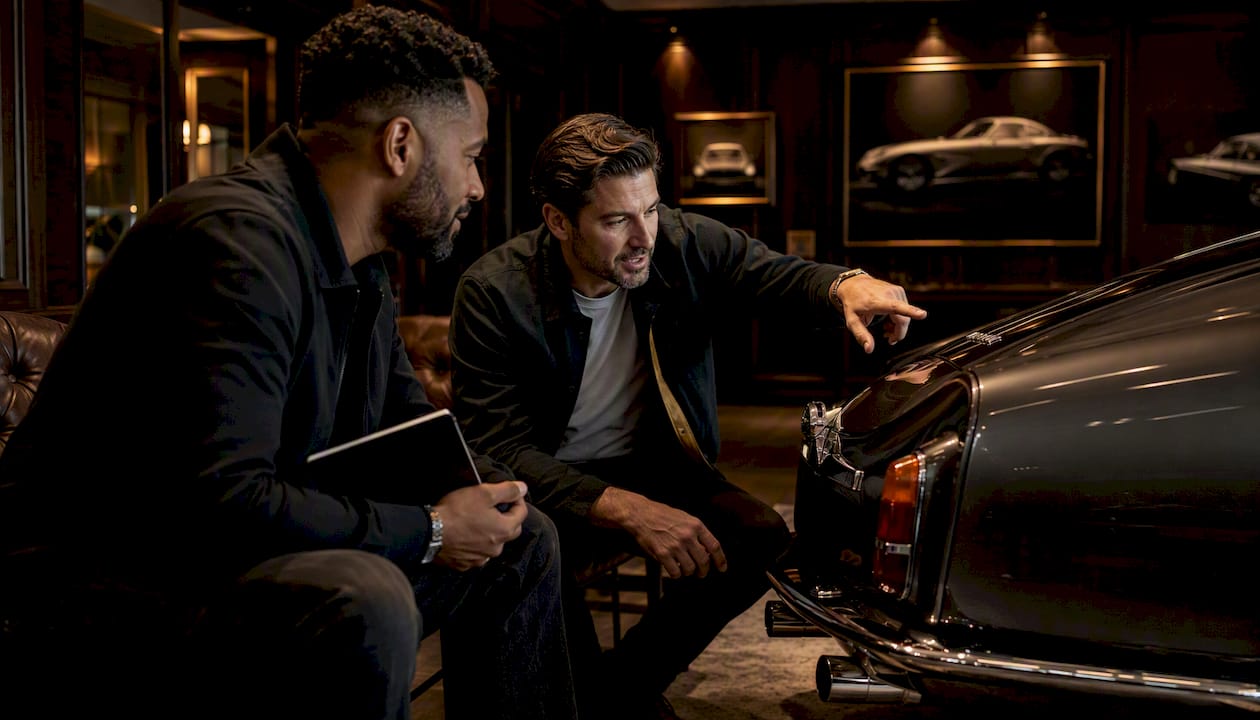
Consignment through a dealer's showroom lets you target retail pricing rather than the wholesale number a trade-in produces. Exclusivity amplifies that advantage because the dealer has every incentive to work hard.
- Concentrated dealer motivation: one dealer, one shot, full effort.
- Premium showroom placement and professional photography/video.
- Buyer financing via dealer lending partners, which expands the qualified buyer pool significantly for cars priced above $80,000.
- Better chance of competitive offers when multiple financed buyers are in the room.
Exclusive consignment is the recognized standard for premium, branded, or limited-edition goods where controlled presentation materially increases buyer willingness to pay.
The real risks
- Higher commission or a premium fee for exclusivity (commissions often fall within a percentage range).
- Lock-in risk if contract terms are poor: long durations, auto-renewals, and vague termination clauses.
- Dependency on one dealer's competence and reporting discipline.
How commission models interact with incentives matters here. A net-to-seller model, where you receive a guaranteed floor and the dealer keeps any upside above it, aligns both parties toward maximizing the sale price. A straight percentage commission can create subtle divergence: a dealer who wants a fast close may push you to accept a lower offer.
Negotiate performance commitments before you sign. Require specific marketing activity, named listing placements, and a reporting cadence. Without those in writing, "exclusive" is just a word.
Pro Tip: Explicitly prohibit automatic renewals in the contract, or set a short renewal window (7–14 days notice) so you cannot be inadvertently locked in past the original term.
Open listing: when flexibility helps and when it hurts
Open listings offer real advantages in specific situations, but collectors should go in clear-eyed about the trade-offs.
Where open listing can work:
- High-volume or commodity performance models where speed and reach outweigh the need for premium presentation.
- Situations where you already have multiple warm private buyers and just need a broker to handle paperwork.
- Lower-rarity cars where the price ceiling is well-established and presentation adds little incremental value.
Where open listing tends to hurt:
- Dealer motivation drops when dealers compete for the same car. Why spend on a video shoot when another broker might close the deal tomorrow?
- Fragmented listings create pricing drift: one broker lists at $95,000, another at $89,000, and buyers anchor to the lower number.
- Buyer financing access shrinks. Dealers who aren't guaranteed the commission rarely invest in arranging lending partners for your specific car.
Pro Tip: If you go open, prepare a single approved listing brief with standardized photography, a fixed asking price, and a written reserve. Require every dealer to use it verbatim.
Why dealer incentives and financing access make exclusives more effective
The economics are straightforward. Dealer networks enable buyer financing for luxury and performance cars, which substantially expands the pool of qualified buyers compared with private-sale buyers who typically must pay cash. A $150,000 Porsche GT3 has a much deeper buyer pool when financing is on the table.
Exclusivity justifies the dealer's upfront spend on marketing, showroom preparation, and financing coordination. That spend is what gets you retail pricing.
| Factor | Exclusive listing | Open listing |
|---|---|---|
| Dealer motivation | High — sole rights justify full effort | Low — competition dilutes incentive |
| Financing access | Strong — dealer arranges lending partners | Weak — dealers rarely invest without exclusivity |
| Expected net price | Closer to retail | Closer to private-sale or below |
| Speed to sale | Moderate (30–90 days typical) | Can be faster, but at a lower price |
Pro Tip: Ask any dealer directly: "Which lending partners do you work with for buyers of cars in this price range?" A dealer who can't name at least two is unlikely to expand your buyer pool meaningfully.
Fees, payout models, and timelines you should expect
Dealer commissions commonly fall in the 5–15% range for percentage-based consignment agreements. Net-to-seller models guarantee a minimum payout and let the dealer keep any upside above the floor.
| Commission type | Typical range | Seller impact |
|---|---|---|
| Percentage-based | 5–15% of sale price | Predictable cost; dealer incentive may favor speed over price |
| Net-to-seller (floor + upside) | Floor set by negotiation | Guaranteed minimum; dealer motivated to exceed floor |
| Flat fee | Fixed dollar amount | Rare for premium cars; removes dealer's upside incentive |
Well-executed consignment often nets sellers $1,500–$3,500 more than instant cash or wholesale offers when dealers target retail pricing with professional marketing.
Most agreements run 30–90 days and can include automatic renewal clauses that trap a vehicle with the dealer if you don't terminate explicitly before expiry.
Require a written payout timeline in the contract. A clear number of days from completed paperwork and ownership transfer to funds in your account protects you if a dealer delays settlement.
Typical timeline: Inspection and valuation → professional photography and listing → buyer inquiries and viewings → offer accepted → paperwork and LTA documentation → buyer financing clearance → payout to seller.
Quick checklist: when should you choose exclusive vs open?
Choose exclusive when:
- The car is collectible, rare, or benefits from showroom-grade presentation.
- Buyer financing is likely needed to reach your target price.
- You want retail pricing and can wait 30–90 days.
- The dealer has a proven track record with similar cars.
Choose open when:
- The model is high-volume and price is well-established.
- You have multiple warm private buyers already lined up.
- Speed matters more than maximizing net proceeds.
- The car's rarity doesn't justify premium presentation costs.
Questions to ask any dealer before signing:
- What is your exact commission model and how is the floor price set?
- Which platforms will you list on and what marketing spend do you commit to?
- Which lending partners do you work with for buyer financing?
- What is the payout timeline after ownership transfer?
- Who holds the title and where are sale proceeds held until payout?
- Does the contract auto-renew, and what is the notice period to terminate?
- Can you provide a certificate of insurance covering the car while in your care?
Minimum protections to demand in writing before handing over keys:
- Written asking price and reserve/floor price.
- Title retention in your name until sale completes.
- Segregated client account for sale proceeds.
- Certificate of insurance from the dealer.
- Clear termination clause with no automatic renewal.
Key contract terms that protect your net proceeds
A good consignment agreement is short on trust and long on specifics. These are the clauses that matter.
Must-have clauses:
- Explicit net-to-seller formula or commission percentage, stated in dollars or percentage with no ambiguity.
- Written asking price and reserve (minimum acceptable offer).
- Payment timeline: specific number of days from completed transfer to payout.
- Proof of dealer insurance: a certificate of insurance naming you as an additional insured.
- Title retention language: title stays with you until the buyer's funds clear.
- Segregated client account: sale proceeds held separately from dealer operating funds.
Termination and auto-renewal: Automatic renewal clauses are the most common trap. Negotiate a short notice window (7–14 days), explicit consent required for any renewal, and a clear early-release condition if the dealer fails to meet marketing commitments.
Reporting and marketing commitments: Require weekly or bi-weekly reporting, approval rights over listing copy and photography, and named platform placements (SgCarMart, Instagram, Facebook at minimum).
Red flag: Any dealer who resists putting marketing commitments in writing is signaling they don't intend to honor them.
Pro Tip: Negotiate shorter initial terms (30–45 days) with renewal options rather than signing a 90-day agreement upfront. A dealer confident in their ability to sell won't object.
Red flags in contract language:
- Commingled funds language (proceeds mixed with dealer operating accounts).
- Oral-only agreements with no written contract.
- Vague payment timelines ("within a reasonable time").
- Ambiguous title language that implies transfer before sale.
- No mention of insurance or liability during storage and test drives.
If you pick open listing: step-by-step actions to protect your price
- Prepare a single approved listing brief. One document: asking price, reserve, key specs, approved photography, and a short description. Every dealer uses it verbatim.
- Centralize photography and video assets. Professional photos taken once, distributed to all dealers. High-quality listing photography is the single biggest lever on first-impression value.
- Set a hard reserve. No dealer accepts an offer below your floor without your written approval.
- Designate a lead broker. One point of contact coordinates viewings and tracks all active listings to prevent conflicting prices appearing simultaneously.
- Track all active listings weekly. A simple spreadsheet with dealer name, platform, listed price, and last-updated date catches pricing drift before it anchors buyers to the wrong number.
- Require notification within 24 hours of any offer. Verbal offers that disappear before you hear about them are a real problem in multi-broker arrangements.
- Maintain your own insurance. Owners should maintain comprehensive insurance during consignment and demand a certificate of insurance from each dealer, because dealer garage liability policies often have exclusions that won't fully protect you.
Pro Tip: Use a shared Google Sheet or Notion page accessible to all brokers showing the current asking price and reserve. It removes any excuse for a dealer listing below your floor.
Deal and dealer red flags: when to walk away
Contractual red flags:
- No written agreement offered.
- Auto-renewal without explicit notice requirement.
- Unclear or missing payment timeline.
- No certificate of insurance from the dealer.
- Commingled funds language in the proceeds clause.
- Any request to transfer title before the buyer's funds clear.
- Refusal to use a segregated client account.
Operational red flags:
- Poor photography examples from past listings.
- Vague marketing plan with no named platforms or spend commitments.
- No reporting cadence offered.
- Dealer unwilling to allow you to inspect the car before final acceptance of an offer.
- Pressure to accept the first offer quickly without explanation.
The most common owner losses in consignment follow dealer insolvency or fund commingling. In Palmer v. Ted Stevens Honda, a seller's Ferrari was reconsigned without consent and the $29,500 proceeds were commingled with dealer funds. Title retention language and a segregated proceeds account are the two clauses that prevent exactly this outcome.
Key Takeaways
For most collectible and performance cars, exclusive consignment with a dealer who offers buyer financing and professional marketing produces the highest net-to-seller outcome.
| Point | Details |
|---|---|
| Exclusive beats open for premium cars | Concentrated dealer motivation and financing access push sale prices closer to retail. |
| Net-to-seller models align incentives | A floor price plus dealer upside gives you certainty and keeps the dealer motivated to exceed it. |
| Auto-renewal clauses are the top trap | Negotiate a 7–14 day notice window and explicit consent for any renewal before signing. |
| Title and segregated proceeds protect you | Retain title until funds clear and require a segregated client account to guard against dealer insolvency. |
| Bavarian's exclusive model | Bavarian handles professional photography, platform listings, LTA documentation, and buyer financing for collectors in Singapore. |
The case for exclusive consignment is stronger than most sellers realize
Most sellers focus on the commission rate and miss the variable that actually moves the needle: buyer pool size. A dealer who can arrange financing for a $200,000 Lamborghini is not just a convenience. They are the difference between three cash buyers and fifteen qualified buyers, and competitive pressure between those fifteen is what drives the price up.
The open listing argument sounds appealing in theory. More brokers, more reach, more chances. But reach without effort is noise. A dealer who knows another broker might close the deal tomorrow has no rational reason to spend on a video shoot, a showroom detail, or a targeted social campaign. They'll list the car and wait.
What I see consistently is that collectors who negotiate tight exclusive agreements, with short terms, clear performance commitments, and proper title and proceeds protections, come out ahead. The ones who spread the car across multiple brokers to "maximize exposure" often end up with a lower price, inconsistent presentation, and a longer time on market than they expected.
The contract is where the real work happens. A well-structured exclusive agreement is not a leap of faith in one dealer. It's a set of enforceable commitments that make the dealer's interests and yours point in the same direction.
Bavarian's consignment model is built for collectors who want the best net price
Private owners of performance and luxury cars in Singapore have a specific problem: the buyer who will pay the most for a Ferrari, Porsche, or Bentley is rarely browsing a generic classifieds site. They're walking into a showroom, asking about financing, and responding to targeted content that speaks to the car's provenance and condition.
Bavarian's exclusive consignment service handles the full process, from professional photography and viral-style video to listings across SgCarMart, Instagram, TikTok, and Facebook, plus all LTA documentation and ownership transfer. The showroom at Gillman Barracks gives your car the physical presence that serious buyers expect. Buyer financing is available through Bavarian's lending partners, which means more qualified buyers and stronger competitive offers on your car.
No sale, no fee. The commission model only triggers when the car sells, which keeps Bavarian's incentives pointed squarely at your outcome.
Get a free valuation and see what your car is worth on the open market before you commit to any listing structure.