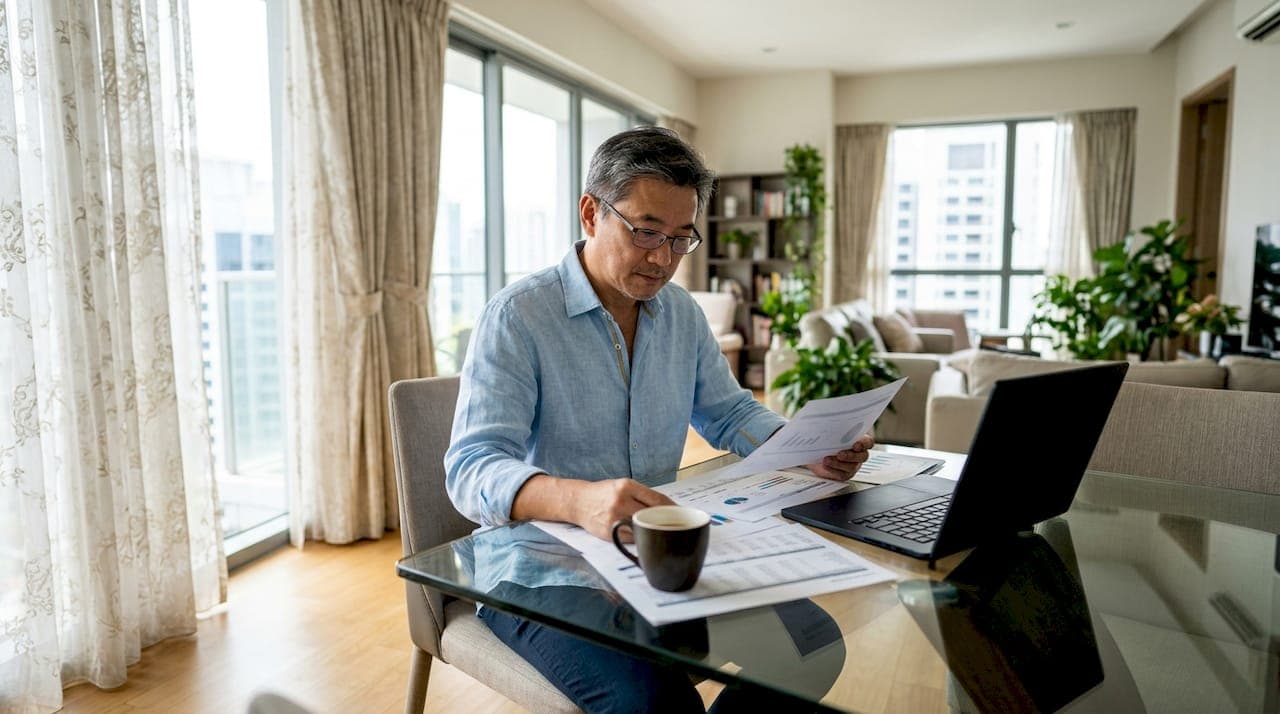
Car depreciation in Singapore is unlike anywhere else in the world. The value your car loses each year isn't just about wear and mileage. It's driven by a government-mandated financial schedule tied to the Certificate of Entitlement (COE) and the Preferential Additional Registration Fee (PARF) rebate system, creating a predictable, structured decline that every owner can calculate in advance.
Here's what makes Singapore unique:
- COE lifespan: Every car gets a 10-year COE. Once it expires, the car has zero paper value unless the COE is renewed. This hard deadline accelerates depreciation in ways no other market replicates.
- PARF rebate: When you deregister within 10 years, you recover a percentage of the ARF you paid at registration. Under the revised 2026 schedule, cars registered from february 13, 2026 COE bidding onward receive only 30% of ARF at year 5 or earlier, dropping to 5% at year 10, capped at S$30,000. The previous regime offered 75% to 50%, capped at S$60,000.
- The 10-year rule: After 10 years, no PARF rebate applies at all. Selling before that cutoff is almost always financially better.
- Two layers of loss: Physical wear reduces resale appeal. The PARF schedule reduces paper value on a fixed calendar. Both work against you simultaneously.
- Depreciation as a cost benchmark: Depreciation accounts for a substantial portion of total car ownership cost in Singapore, making it one of the largest expenses most owners underestimate.
Understanding these factors lets you time your sale, choose the right platform, and avoid the most expensive mistakes in Singapore car ownership.
How to calculate car depreciation in Singapore
The standard formula used across Singapore is straightforward:
Annual Depreciation = (Purchase Price − PARF Rebate) ÷ COE Years Remaining
Here's how to apply it step by step.
-
Find your purchase price. This is the total amount paid, including COE premium, ARF, registration fee, and dealer markup. A higher COE premium directly raises annual depreciation.
-
Calculate your ARF. ARF is tiered on your car's Open Market Value (OMV): 100% on the first S$20,000, 140% on the next S$30,000, and 180% above S$50,000. A car with OMV of S$22,000 carries an ARF of roughly S$22,800.
-
Apply the correct PARF rebate rate. For cars registered before february 13, 2026 (old scheme): 75% of ARF within 5 years, stepping down to 50% at year 10. For cars registered from that date onward (new scheme): 30% within 5 years, down to 5% at year 10, capped at S$30,000.
-
Add your COE rebate. Pro-rated COE value = (Remaining COE months ÷ Total COE months) × COE premium paid.
-
Divide by remaining COE years. This gives your annual depreciation figure.
Example calculation (pre-2026 car): A car purchased for S$140,000 in 2022 with a projected scrap value of S$15,000 at year 10 carries annual depreciation of (S$140,000 − S$15,000) ÷ 10 = S$12,500 per year.
Same car registered in march 2026 (new scheme): Scrap value drops to roughly S$3,000, pushing annual depreciation to S$13,700 per year. That S$1,200 difference comes entirely from the policy change, not the car itself.

Pro Tip: Sell just before a PARF anniversary, not after. Missing an anniversary by a single day can cost 5% of your original ARF, which equals thousands of dollars on higher-value vehicles.
What does typical depreciation look like year by year?
Singapore car depreciation is heavily front-loaded. The first three years see the steepest drop, driven by the gap between new-car purchase price and immediate resale value. After that, the annual loss stabilizes somewhat until the PARF cliffs begin.
| Year of Ownership | Depreciation Pattern | Key Event |
|---|---|---|
| Year 1–3 | Steepest loss | New-car premium evaporates |
| Year 4–5 | Moderate, stabilizing | PARF still at maximum rate |
| Year 5 | Step down | First PARF cliff (old scheme: 75% → 50%) |
| Year 7 | Continued decline | PARF steps accelerate under old scheme |
| Year 10 | Lowest PARF, high urgency | Sell before year 10 to preserve any rebate |
| After year 10 | Zero PARF rebate | COE renewal required or deregister |
Most new cars lose the highest proportion of their value in the first 12 months of ownership. Buying a three-year-old used car sidesteps that initial cliff entirely, with roughly 7 COE years remaining and a much lower entry price.
COE bidding results also move the market. When COE premiums rise, used cars with attached COE become relatively more attractive, lifting resale values across the board. Sellers who time exits with rising premiums consistently recover more than those who sell into a soft COE cycle.
Which platforms help you sell your car and recover the most value?
Nine platforms dominate the Singapore car-selling market in 2026. Each suits a different seller profile, from private owners wanting speed to luxury car owners who need professional marketing to close the gap between trade-in and private-sale value.

| Platform | Service Type | Key Features | Best For | Rating |
|---|---|---|---|---|
| Sgcarmart Quotz | Auction | 500+ dealers, inspection (S$48 or S$98), PayNow payment, flexible handover | Sellers wanting fast, no-haggle auction pricing | 4.8★ |
| Motorist Singapore | Direct sale | Used and scrap car services, direct trade, physical location at Tai Seng Link | Straightforward direct transactions | 4.9★ |
| Sgcarmart | Marketplace | Wide listings, loan tools, valuation guides, new and used cars | Buyers and sellers wanting broad market exposure | 4.8★ |
| OneShift by Carousell | Marketplace + auction | Verified dealer bids, depreciation calculators, COE news, Car of the Year 2025 | Sellers wanting dealer bidding plus market tools | 4.8★ (677 reviews) |
| Sg CarClick | Dealer platform | Standard buy/sell dealer services | General dealer transactions | 4★ (445 reviews) |
| EZY-1 Pte Ltd | Dealer | Car sales with personalized service | Buyers valuing attentive, personal service | 5★ (163 reviews) |
| Auto Direct Pte Ltd | Premium dealer | Pre-owned premium cars, flexible financing, fast ownership transfer | Premium car buyers and sellers needing financing | 4.8★ (116 reviews) |
| Bavarian AutoHaus | Consignment | S$0 upfront fees, professional photo/video marketing, LTA paperwork, luxury focus | Luxury and performance car owners | 4.7★ (114 reviews) |
| UCARS | Marketplace | Basic market connection, growing user base | Sellers wanting simple market access | 4.9★ (84 reviews) |
Sgcarmart Quotz connects sellers to a network of 500+ dealers through a structured auction, with inspection fees of S$48 or S$98 and immediate PayNow payment. It's the fastest route to a confirmed price without negotiating one-on-one.
Motorist Singapore positions itself as Singapore's direct-trade leader, handling both used and scrap car transactions from its Tai Seng Link location.
OneShift by Carousell earned the Car of the Year 2025 award and stands out for its built-in depreciation calculators and COE tracking tools, making it genuinely useful before you even list your car.
Bavarian AutoHaus operates on a no-sale, no-fee consignment model with S$0 upfront costs. The service covers professional photography, viral-style video marketing across SgCarMart, Instagram, TikTok, and Facebook, plus full LTA documentation handling. For luxury and performance cars (BMW, Porsche, Mercedes-Benz, Ferrari), the gap between a dealer trade-in and a well-marketed private sale can easily exceed S$10,000, which is where professional consignment earns its keep.
Auto Direct Pte Ltd specializes in premium pre-owned vehicles with flexible loan schemes and fast ownership transfer, suited to buyers and sellers in the higher price bracket who need financing arranged quickly.
How to choose the right selling service for your car
The right platform depends on what you're selling, how fast you need to move, and how much effort you're willing to put in.
- For speed: Auction platforms like Sgcarmart Quotz deliver a confirmed price within hours. You trade some upside for certainty.
- For mass-market cars: Direct-sale platforms and broad marketplaces like Motorist Singapore and Sgcarmart give you wide exposure with minimal friction.
- For luxury and performance cars: Consignment through a specialist like Bavarian AutoHaus typically recovers more than a dealer trade-in. The value gap between trade-in and private sale for premium vehicles can easily exceed S$10,000.
- For timing your sale: Check your PARF anniversary dates before listing. Selling a week before an anniversary preserves the higher rebate band. Selling a week after costs you that step permanently.
- For financing needs: Auto Direct Pte Ltd offers fast loan approval alongside the sale, which matters if you're buying simultaneously.
Pro Tip: Use OneShift's depreciation calculator to model your car's current annual depreciation before approaching any dealer. Walking in with that number means you can immediately spot whether an offer is fair or anchored to paper value alone.
Maintenance history and vehicle condition affect resale value directly. A full service record and clean exhaust system documentation can meaningfully lift a buyer's confidence and the final price.
How car loans and taxes affect your real ownership cost
Depreciation is the biggest cost, but it doesn't stand alone. A car loan adds interest expense on top of the depreciating asset, meaning you're paying to borrow money for something losing value simultaneously. On a S$100,000 loan at typical Singapore rates over five years, interest charges add meaningfully to the total cost of ownership beyond what the depreciation formula captures.
For private individuals, car depreciation is not tax-deductible in Singapore. Businesses and self-employed persons using a car for commercial purposes can claim capital allowances under Section 19(1) or Section 19(2) of the Income Tax Act, spread over three years or the asset's working life. Luxury cars face a cost cap on those allowances. Private-use portions must be excluded from any claim.
Road tax, insurance, parking, and servicing all compound the picture. Depreciation accounts for 40–50% of total car ownership cost in Singapore, making it one of the largest expenses most owners underestimate.
How to forecast your car's resale value in a changing market
Resale price forecasting in Singapore requires tracking three variables: your car's PARF schedule, remaining COE tenure, and live COE bidding trends.
The 2026 PARF revision created a two-tier market almost overnight. Cars registered before february 13, 2026 carry the old, more generous rebate schedule and now command a slight premium in the used market. Buyers who understand this are actively seeking pre-2026 registrations. Sellers holding those cars have a window to capitalize before the premium fades as those vehicles age past their PARF cliffs.
COE premiums fluctuate with each bidding exercise, and those movements ripple through used car prices within weeks. A sharp rise in COE premiums makes used cars with attached COE relatively cheaper than new registrations, lifting demand and prices. Sellers who monitor COE bidding results and list during premium spikes consistently recover more.
Regulatory changes beyond PARF also matter. EV incentives like the EV Early Adoption Incentive (EEAI), which reduces ARF by up to S$45,000, affect the relative attractiveness of ICE versus EV resale values. As EV adoption grows, ICE resale demand may soften in certain segments, a factor worth modeling for anyone planning a five-year hold.
Expert insights on managing depreciation from a Singapore consignment specialist
Three distinctions separate sellers who recover maximum value from those who leave money on the table.
The PARF cliff is the most actionable insight most owners miss. Paper value drops in steps on each registration anniversary from year 5. A car sold one day before its anniversary is worth measurably more than the same car sold one day after. Checking your exact cliff dates on LTA's OneMotoring portal takes five minutes and can be worth thousands.
Professional consignment closes the gap between trade-in and private-sale value by handling marketing, viewings, and negotiations on the seller's behalf. For a BMW 5 Series or Porsche Cayenne, the difference between a dealer's opening trade-in offer and a well-marketed private sale through a specialist like Bavarian AutoHaus can easily exceed S$10,000. The PARF rebate guide for 2026 walks through exactly how to calculate your floor value before approaching any buyer or dealer.
Bavarian: premium consignment for luxury car owners in Singapore
If you own a BMW, Porsche, Mercedes-Benz, or any performance car and you're weighing your options, Bavarian offers something the auction and direct-sale platforms don't: a fully managed consignment service with S$0 upfront fees and no payment unless your car sells.
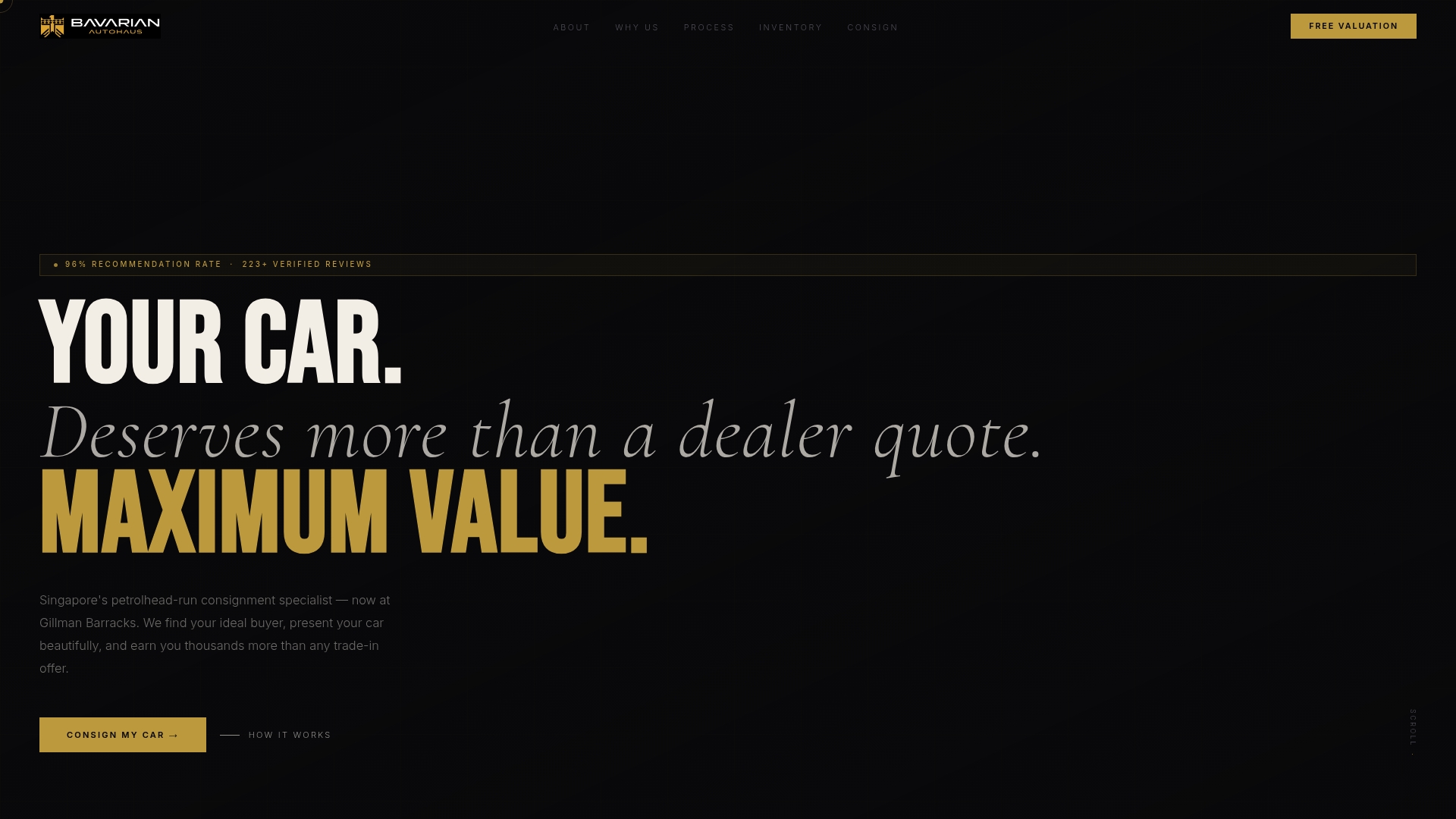
Bavarian handles professional photography, viral-style video production, and targeted listings across SgCarMart, Instagram, TikTok, and Facebook from its showroom at Gillman Barracks. The team manages every inquiry, viewing, negotiation, and LTA transfer on your behalf. For luxury car owners where the trade-in versus private-sale gap is largest, that hands-off process typically recovers significantly more than a dealer's first offer. Visit Bavarian to get a free valuation and see what your car is actually worth on the open market.
Key Takeaways
Car depreciation in Singapore is a scheduled financial loss driven by COE tenure and PARF rebate rules, not just physical wear, making precise timing and platform choice the two highest-leverage decisions any seller can make.
| Point | Details |
|---|---|
| Depreciation formula | Annual loss = (Purchase Price − PARF Rebate) ÷ COE years remaining. |
| 2026 PARF revision impact | New-scheme cars face a S$30,000 rebate cap versus S$60,000 previously, raising annual depreciation by roughly S$1,200 on a S$140,000 car. |
| Front-loaded losses | The first three years carry the steepest depreciation; buying a used car avoids that initial cliff. |
| PARF cliff timing | Selling just before a registration anniversary preserves the higher rebate band; missing it by a day costs 5% of ARF. |
| Bavarian for luxury sellers | Bavarian's no-fee consignment model suits BMW, Porsche, and performance car owners where the trade-in versus private-sale gap is widest. |