In Singapore, the test driver is usually held financially responsible for damage and traffic offences during a test drive, while the dealer's insurance typically covers third-party liability subject to an excess. Before you touch the wheel, ask for the insurer's name and the excess figure in writing, then photograph the car. If the dealer can't answer either question clearly, that's your signal to slow down.
TL;DR:
- The typical excess for damage claims during Singapore test drives is around S$1,500, with additional charges possible depending on the incident.
- Signing the indemnity form makes you liable for damage and traffic offences but does not determine fault, which insurers will decide later.
- Always verify insurer details, excess amounts, and the presence of a supervisor before starting a test drive to avoid unexpected liabilities.
- Contact your insurer immediately after an accident to confirm coverage, especially if your policy includes non-owned vehicle protection.
- Proper documentation, including photos and witness details at the scene, is crucial for controlling claim outcomes and avoiding disputes.
Table of Contents
- What Dealership Test-Drive Indemnities Usually Require in Singapore
- Who Pays After an Accident: Dealer Insurer, Your Insurer, or You?
- Step-by-Step Actions After a Test-Drive Accident
- What to Check Before You Accept a Test Drive
- Typical Excess Amounts and Quick Example Scenarios
- Bavarian's Approach to Managing Test-Drive Risk
- The Gap Between What Dealers Promise and What Drivers Actually Face
- Sources
What Dealership Test-Drive Indemnities Usually Require in Singapore
Every reputable dealer in Singapore hands you a form before the keys, and signing it means something specific. It's not just paperwork. It's you accepting financial exposure for whatever happens over the next twenty minutes.
Audi Singapore's test-drive indemnity is a useful template because it spells out exactly what most dealer forms in this market ask for. Drivers need a valid Class 3 license, a minimum of two years' driving experience, and must fall within a specified age range. Sign it and you accept liability for damage to the vehicle and for any traffic offences committed while driving. The form also lists concrete excess figures: S$1,500 for own-damage claims and an additional S$500 excess on top depending on the circumstance.
Signing the indemnity doesn't settle who's at fault. It documents that you agreed to bear financial responsibility if you are found at fault, but insurers and, where relevant, the police still determine that outcome. The indemnity is a contract term, not a verdict.
Before you sign, expect the form to include license details for verification, an age bracket requirement, a clause about excess amounts for claims without specifying exact figures. A PDPA notice explaining the collection of personal data, and a clause accepting liability for traffic offences committed during the drive.
Who Pays After an Accident: Dealer Insurer, Your Insurer, or You?
The dealer's motor policy is almost always the first line of cover for damage to a dealer-owned vehicle, and it splits into two distinct categories: third-party liability, which protects other people and their property, and own-damage cover, which protects the car you were driving. These aren't interchangeable, and a policy that handles one well can be thin on the other.
Your own personal motor insurance can come into play too, particularly if your policy includes non-owned vehicle cover, sometimes called driving other cars extension. Not every personal policy has this. Call your insurer as soon as anything happens, even a scrape, because a delayed notification can complicate a claim regardless of whose vehicle you were driving.
Excess mechanics work the same way they do in rental agreements: the dealer may ask you to pay the excess amount up front before repairs proceed, and whether you get any of it back later depends entirely on fault determination and insurer subrogation. If the other party is found liable, your insurer or the dealer's insurer can pursue recovery from their side. That process takes weeks, not days.
Local community discussion on Motorist Singapore confirms this is common practice: dealers often expect the test driver to bear the cost under their own policy terms, and in some cases have pushed drivers toward purchasing the damaged vehicle outright. That's an aggressive ask, and you're not obligated to agree to it on the spot.
Quick summary of who typically pays:
- Dealer-owned car, dealer at fault (mechanical failure, prior damage): dealer's insurer
- Dealer-owned car, driver at fault: driver's excess payment, per the indemnity
- Third-party involved, fault disputed: both insurers investigate, subrogation may follow
Pro Tip: Call your insurer before you pay any excess or sign anything that resembles an admission of liability. A phone call costs you nothing and can save you from committing to a number that isn't actually yours to pay.
Step-by-Step Actions After a Test-Drive Accident
What you do in the first ten minutes shapes how the claim goes for weeks afterward.
- Check for injuries first. Call 995 for any injury, no matter how minor it looks.
- Contact the Singapore Police Force for reportable collisions, particularly those involving injury, disagreement over fault, or damage above the reporting threshold.
- Document everything on the spot. Photos and video of both vehicles, the road position, license plates, and any visible skid marks or debris.
- Get witness details. Names and phone numbers, taken immediately, before people leave the scene.
- Notify the dealer and ask for their insurer's name and policy reference number directly, not secondhand from a salesperson.
- Notify your own insurer as well, even if you believe the dealer's policy will handle everything.
- File a police report where required and keep the reference copy.
- Request a Motor Accident Report Form if the situation calls for one.
- Don't admit fault out loud. Stay cooperative, but leave fault determination to the people whose job it is to determine it.
That last point isn't just caution. Standard rental and dealer terms explicitly instruct drivers not to admit liability at the scene, because an offhand "sorry, my fault" can complicate a claim that the evidence might otherwise support in your favor.
What to Check Before You Accept a Test Drive
A few questions before you get in the car can save you a very bad afternoon. Ask to see the indemnity form itself, not just a summary, and get the named insurer and excess amount in writing or a photo. Confirm whether a salesperson is riding along or you're driving solo, since supervised drives change the liability conversation if something goes wrong.
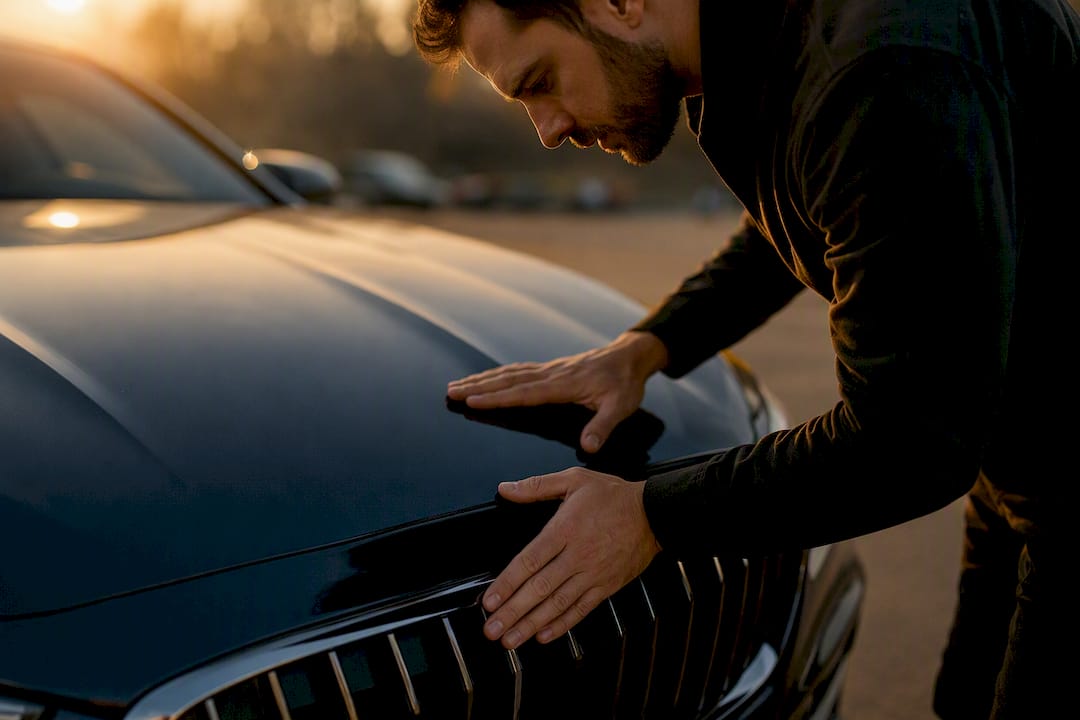
Walk around the car before you start the engine — and consider how to book a test drive with a dealer who prioritizes transparency and careful handover. Time-stamped photos of every panel, the wheels, and the interior protect you if the dealer later claims you caused a scratch that was already there. Note who physically hands you the keys, since that's the person you'll need to reference later.
Ask directly whether the dealer offers any temporary test-drive coverage. SGCarMart's DriveCover is one example in this market, offering personal accident coverage on first signup, though the payout limits are modest and the scope is narrow. Read what it actually covers before assuming it protects you from everything.
Finally, ask about exclusions. Tyre damage, underbody scrapes, and off-road use are commonly excluded from standard coverage, and Loss Damage Waiver options that reduce your excess exist in the rental world and sometimes in dealer test-drive terms too. It costs nothing to ask if one's available.
Pro Tip: Photograph the odometer reading and fuel gauge alongside the body panels. It seems excessive until a dispute over mileage or fuel level turns into an argument you can't win without proof.
Typical Excess Amounts and Quick Example Scenarios
Excess figures vary by dealer and vehicle category, but the examples below reflect real in-market terms.
| Scenario | Typical Excess | What It Covers |
|---|---|---|
| Own-damage claim (Audi Singapore example) | S$1,500 | Damage to the test-drive vehicle itself |
| Additional excess (same policy) | S$500 | Supplementary charge depending on incident type |
| Rental-style Loss Damage Waiver reduction | Varies by provider | Reduces the driver's out-of-pocket excess exposure |
That S$1,500 figure from Audi Singapore's own-damage clause is worth sitting with for a second. It's not a hypothetical worst case. It's the standard excess written into a mainstream dealer's test-drive indemnity, which means a minor parking-lot scrape can carry a four-figure price tag before anyone even discusses fault.
Excess typically applies per incident, not per claim, and common exclusions (tyres, underbody, deliberate misuse) sit outside what any waiver reduces.
Bavarian's Approach to Managing Test-Drive Risk
Professional consignment work in Singapore runs on the same principle: fewer disputes happen when the paperwork and process are tight from the start. Bavarian's standard practice for test drives includes:
- Supervised drives rather than handing over keys unaccompanied
- Time-stamped condition photos taken before the drive begins
- Signed indemnity and insurer verification kept on file for every viewing
That documentation discipline matters when a claim needs sorting out weeks later, not just on the day. Sellers preparing a car for sale can review Bavarian's car sale paperwork checklist and handover checklist to see exactly what proper documentation looks like before a buyer ever sits in the driver's seat.
The Gap Between What Dealers Promise and What Drivers Actually Face
Most advice on test-drive liability treats the indemnity form as a formality, something to skim and sign so you can get to the fun part. That's backwards. The form is the entire risk conversation compressed into two paragraphs, and most drivers never read the excess line until they're staring at a repair invoice.
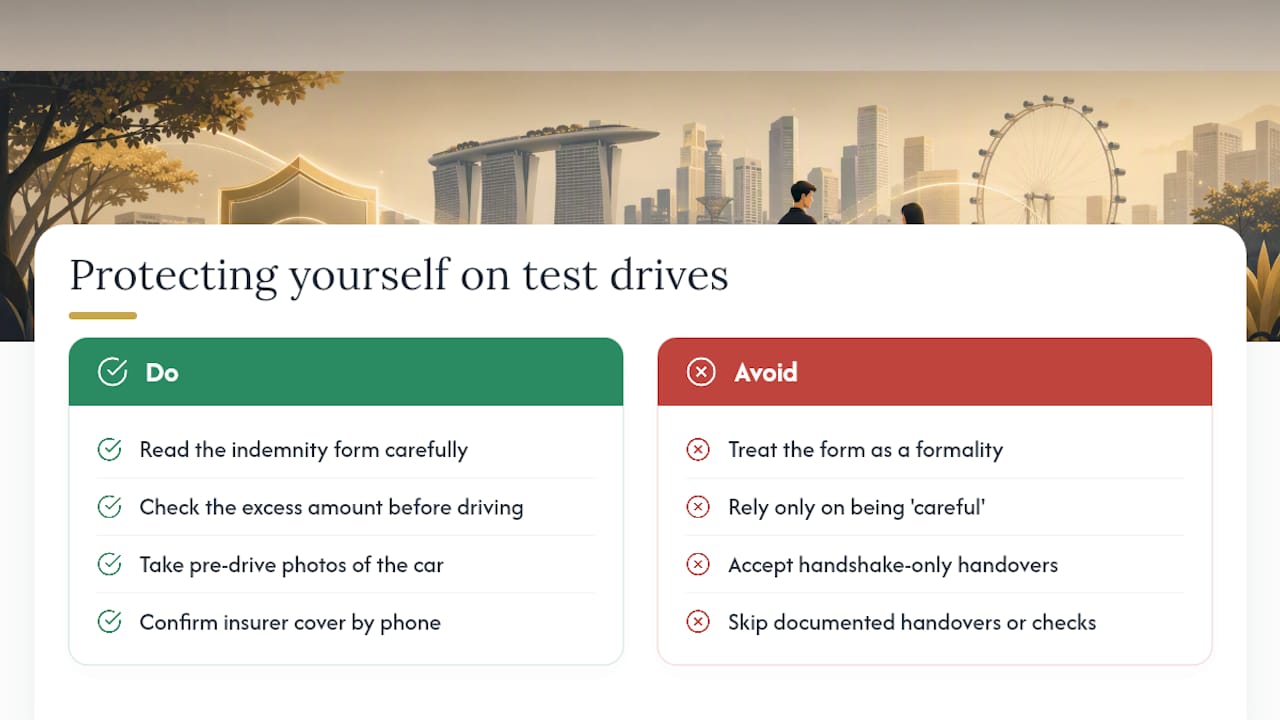
The conventional wisdom says "just be careful." That's not wrong, but it's incomplete. Careful drivers still get rear-ended by someone else, still hit gravel they didn't see, still deal with a dealer who wants payment before fault is even established. What actually protects you isn't caution behind the wheel. It's documentation before you ever start the engine and a clear-eyed read of the excess figure.
If there's one thing worth prioritizing above everything else in this article, it's this: treat the pre-drive photos and the insurer conversation as non-negotiable, not optional extras. A consignment approach that builds this into every handover, the kind detailed in Bavarian's consignment guide, exists precisely because informal handshake deals are where disputes multiply.
— Shawn
Selling a high-performance car privately means the same test-drive risks apply, often with higher stakes given the values involved. Bavarian handles the full process on your behalf, supervised drives, documented handovers, and verified buyer credentials included, so you're never the one exposed when someone else is behind the wheel of your car.
Sources
- Privacy Policy for Test Drives > Audi Singapore
- Protect Yourself With Test Drive Coverage – Sgcarmart
- Avis Singapore rental terms and conditions (example)