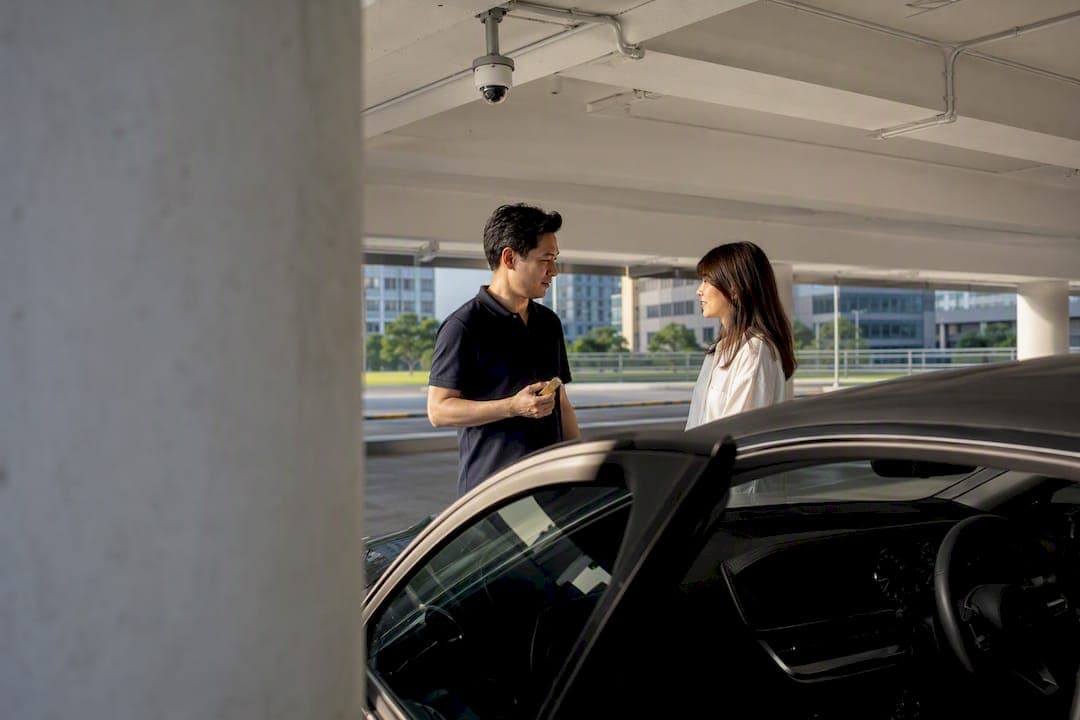
Verify the buyer's driver's license and insurance before anyone touches the key, and never let a stranger drive alone. Meet in a public, daytime location, ride along on every test drive, and hold off releasing the car until payment has actually cleared, not just been promised. If a buyer resists any of this, refuse the viewing and walk away. No sale is worth a stolen $200,000 Porsche.
TL;DR:
- Verifying the buyer's license and insurance before the test drive is essential, and refusing a sale if they resist safety protocols is advised.
- Public, well-lit meeting spots with visible surveillance are recommended, and private locations should only be used if necessary and prepared for.
- Insisting on a phone call to screen serious buyers can prevent scams, and always photograph the buyer’s license for record-keeping.
- Conduct test drives with the seller in the passenger seat, on short routes, and with a written agreement to limit liability.
- Handling payment through verified bank transfers or cashier’s orders reduces fraud risk, and final ownership transfer should only occur once funds are confirmed.
Table of Contents
- Preparing the Car and Setting Meeting Logistics
- How Do You Screen Buyers Before They See the Car?
- What Rules Should Govern Every Test Drive?
- Closing the Sale: Payment and Handover Without Getting Burned
- Your Printable Before, During, and After Checklist
- Public Lot or Private Driveway? Choosing the Right Viewing Spot
- Should You Bring a Mechanic or a Knowledgeable Friend?
- Using Your Phone as a Safety Tool During Viewings
- Spotting the Scams That Target High-End Car Sellers
- Basic Hygiene and Health Steps for In-Person Meetings
- Shawn's View From the Consignment Floor
- Why Consignment Removes the Risk Entirely
- Sources
Preparing the Car and Setting Meeting Logistics
Car viewing safety starts before the buyer ever arrives. Where you meet and what you leave inside the car both shape how much risk you're carrying into that first handshake.
Pick a location with cameras, foot traffic, and a reason for a stranger not to try anything. A bank branch parking lot, a busy shopping center, or the lot outside a police station all work well, and daytime slots beat evening ones every time. Travelers Insurance recommends exactly this kind of public, well-lit meeting spot for test drives, and the logic holds just as well for a first viewing.
Before the buyer shows up:
- Remove the logbook, insurance card, and any personal documents from the glove box.
- Clear out valuables, garage remotes, and parking cards.
- Wipe down the car and check tire pressure so the first impression matches the price tag. A proper pre wash routine makes a real difference on darker paint and matte finishes.
- Set expectations early in your messages or on the phone: ID and proof of insurance are required before any test drive, and serious buyers should be ready to show proof of funds.
Pro Tip: Bring a second person to every viewing, even a friend or family member. Two sets of eyes catch more, and it signals to the buyer that you're organized, not an easy target. Keep your spare key in your own pocket at all times, not in the car.
How Do You Screen Buyers Before They See the Car?
A phone call filters out most of the trouble before it ever reaches your driveway. Kelley Blue Book's advice is to insist on speaking with serious buyers directly rather than negotiating entirely through text, and that single habit does more screening work than any app.
Run through this before you agree on a time:
- Ask why they want the car and how they plan to pay. Vague answers or a rushed timeline are worth noting.
- Confirm they hold a valid driver's license and are prepared to show it in person.
- Ask if they've arranged financing or a pre-approval, if relevant, and whether they've seen the listing photos and price already.
- State plainly that you'll photograph their license before any test drive.
Genuine buyers rarely object to a short call. Scammers frequently avoid it altogether, which makes the phone screen itself a filter, not just a formality.
When the buyer arrives, check the license photo against their face, photograph the front of the license, and store that photo somewhere private rather than in a shared album. One habit worth adopting: text the photo and meeting time to a trusted contact immediately, which creates a timestamped record if anything goes sideways later.
On insurance, ask what coverage they're relying on for the test drive and whether it's their own policy or a short-term rental cover. Checkacar is blunt on this point: never let someone drive without confirming valid insurance first, and refuse the test drive outright if anything about the coverage seems invented on the spot.
Cancel without hesitation if a buyer refuses the phone call, won't show a license, or keeps steering the meeting toward an isolated spot. Those aren't quirks. They're the pattern scammers follow.
What Rules Should Govern Every Test Drive?
The test drive is where a private sale carries the most physical and financial risk, especially with a car worth six figures. Treat it like a small, managed event, not a casual favor.
Start with a short written acknowledgment, even a single page, noting the driver's name, license number, and a line confirming they understand they're responsible for any damage during the drive. This isn't about intimidating a buyer. It's about having something concrete if a dispute or an accident and liability question comes up afterward.
Then enforce these basics without exception:
- Sit in the passenger seat for the entire drive. Never hand over the car and stay behind.
- Set the route yourself: a planned short loop on roads you know, avoiding highways. Sell A Vehicle's guidance recommends a short route on quiet residential streets, which also makes it easier to judge how the buyer actually handles the car.
- Keep your spare key with you, never in the car, and don't leave the logbook or registration inside during the drive.
- Consider holding something of the buyer's, like their own car key or a bag, as a simple deterrent against a drive that doesn't come back. If that's not practical, stay alert to the route and never let the car out of your sight.
If something does go wrong, follow the same order every time: check that everyone is safe first, then photograph the scene and any damage, exchange contact and insurance details, and notify your insurer and the police. Don't apologize or admit fault at the scene. LegalClarity's overview notes that sellers who skip verification and let an unfit or uninsured driver take the wheel can face negligent entrustment liability, meaning you can be held personally responsible even though you weren't driving.
Pro Tip: A one-page test-drive agreement takes two minutes to draft and can save weeks of argument over who pays for a scraped bumper.
Closing the Sale: Payment and Handover Without Getting Burned
Money changes hands at the most vulnerable point in the whole process, right when trust is highest and scrutiny tends to drop. That's exactly when scams happen.
Stick to payment methods you can verify independently: a bank transfer you confirm has actually cleared in your account, or a cashier's order verified directly with the issuing bank. Avoid large cash sums and personal checks entirely, since both can be faked or reversed after you've already handed over the keys.
Before you release anything:
- Re-check the buyer's identity against the license you photographed earlier.
- Complete the ownership transfer paperwork in full. Singapore sellers should work through the LTA documentation and transfer checklist so nothing gets missed on the legal side.
- Walk around the car and compare it against your pre drive photos, checking for new scuffs, curb rash, or interior damage from the test drive.
- If a buyer says they need the car immediately, before funds have cleared, refuse. Offer an escrow arrangement or a consignment sale instead rather than bending on this point.
A handover checklist built specifically for this last step keeps the process from feeling rushed, which is usually when mistakes happen.
Your Printable Before, During, and After Checklist
Print this or save it to your phone before your next viewing.
- Before the meeting: Call the buyer directly, agree on a public daytime location, remove valuables and documents from the car, and confirm they understand ID and insurance are required.
- At the meeting: Photograph their license, keep your spare key on your person, and never let them drive without you in the passenger seat.
- After the test drive: Inspect the car for new damage, photograph anything questionable, confirm payment has actually cleared, and only then complete the paperwork and hand over the keys.
| Stage | Key action | Why it matters |
|---|---|---|
| Before | Phone screen and public location | Filters scammers, reduces isolation risk |
| During | License photo, ride-along, short route | Verifies identity, limits theft and accident exposure |
| After | Inspect car, confirm cleared funds | Prevents disputes and fraud losses |
Public Lot or Private Driveway? Choosing the Right Viewing Spot
Where you show the car changes your risk profile more than almost any other decision you'll make. A public, monitored location, think a shopping center lot, a car park with security cameras, or a spot near a police station, gives you witnesses and a paper trail if anything goes wrong. It also discourages the kind of buyer who's looking for an easy, unwatched target in the first place.
Private property, including your own driveway, isn't automatically unsafe, but it removes the built-in oversight a public spot provides. If a buyer insists on meeting at their home or another private address instead of a neutral location, treat that as a flag worth questioning rather than a minor preference. There's rarely a good reason a genuine buyer needs the meeting on their own turf.
If you do host a viewing at your home, keep the garage door down until the buyer arrives, don't leave the car unattended in a driveway with the doors unlocked, and make sure a neighbor or household member knows the meeting is happening and roughly how long it should take. For a car worth six figures, that kind of awareness costs nothing and buys real peace of mind.
Daylight hours matter regardless of venue. A viewing scheduled for dusk or after dark strips away the visibility that makes public locations safer in the first place, so keep appointments within normal daytime hours whenever you have the choice.
Should You Bring a Mechanic or a Knowledgeable Friend?
Bringing backup to a viewing does double duty: it adds a layer of physical safety, and it gives you a second, technically informed opinion on the car's condition if you're the one buying, or reassurance if you're the seller fielding an inspection request.
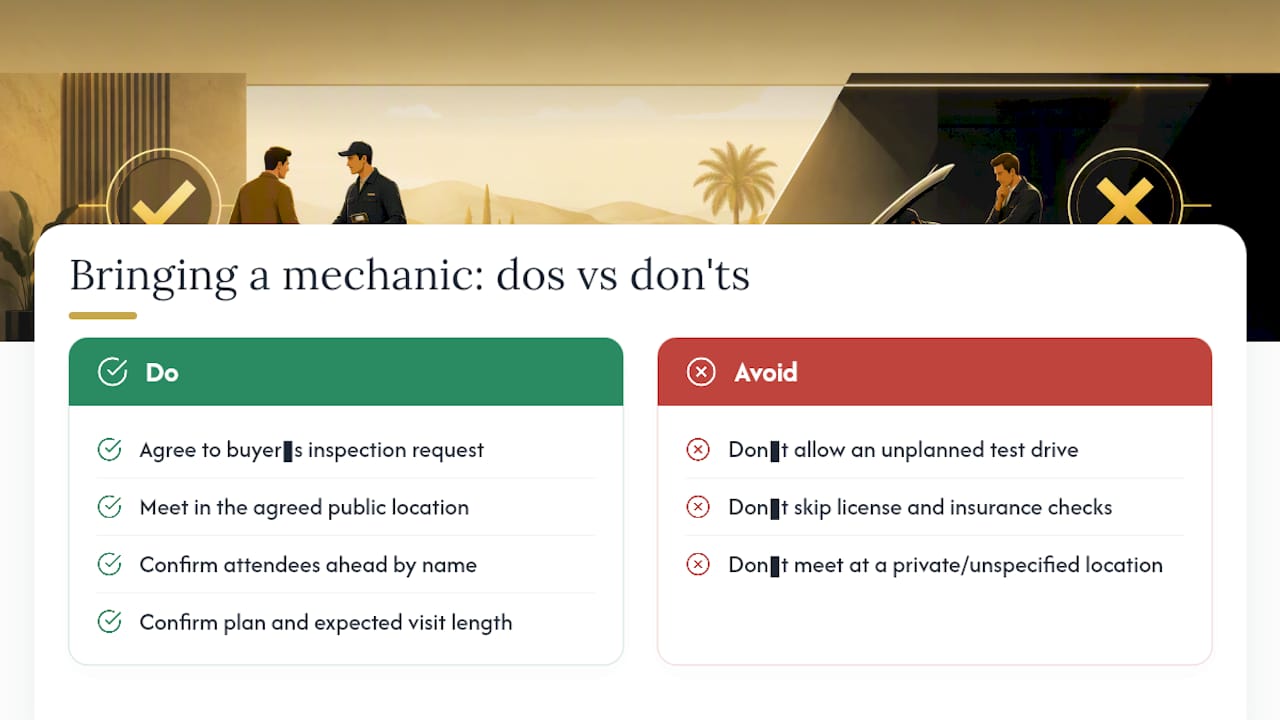
For sellers of performance and luxury cars specifically, buyers will often ask to bring their own mechanic or a car-savvy friend to inspect the vehicle before committing. That's a normal, reasonable request, not a red flag on its own. Agree to it, but keep the same rules in place: meet in the agreed public location, confirm who's attending ahead of time by name, and don't let the inspection turn into an unplanned test drive without the same license and insurance checks you'd otherwise require.
If you're the one bringing support to a viewing, a mechanic can spot inconsistencies a casual glance misses, mismatched panel gaps, odd tire wear patterns, fluid residue that suggests a recent leak. A knowledgeable friend who simply stands nearby during the conversation changes the dynamic too. Buyers and sellers alike tend to behave more carefully when a second, attentive person is present.
Just confirm in advance that whoever you bring is comfortable with the plan: where you're meeting, roughly how long the visit should take, and what happens if the other party wants to extend into a test drive on the spot.
Using Your Phone as a Safety Tool During Viewings
Your phone is one of the most underused safety tools you already own. Share your live location with a trusted contact for the duration of the meeting, most location-sharing features built into modern smartphones make this a thirty-second setup, and let that person know roughly when you expect to be done.
Recording the meeting, or at least the key moments, adds another layer of protection. A quick video of the buyer's license alongside their face, timestamped and sent to your own phone or a family member, creates a record that's hard to dispute later. Some sellers keep a dash cam running during the entire viewing and test drive as a matter of habit. It's a small step that costs nothing and can settle a dispute over damage or driving behavior in seconds rather than arguments.
If you're demonstrating a car with real performance credentials, such as a Porsche 911 or an AMG Mercedes-Benz, resist the urge to let recording slide because the buyer seems friendly and the conversation is going well. The buyers who turn out to be trouble are rarely the ones who look suspicious at first glance.
Spotting the Scams That Target High-End Car Sellers
Performance and luxury cars attract a specific kind of scam, and most of them follow a recognizable script once you know what to look for.
The overpayment scam is common: a buyer sends a check or transfer for more than the agreed price and asks you to refund the difference, only for the original payment to bounce after you've already sent money back. Treat any payment that exceeds your asking price as an automatic red flag, no exceptions.
Fake proof-of-funds screenshots are another. A buyer texts a bank balance screenshot to seem credible, but screenshots prove nothing. Insist on verifying funds directly with your own bank before releasing the car, not on the buyer's word or an image.
Watch for buyers who push hard to skip the phone call, avoid showing a license, or pressure you to meet somewhere isolated "for convenience." Each of those, on its own, might be nothing. Together, they're the exact pattern that precedes theft or fraud in the cases that go wrong.
Finally, be wary of anyone offering to pay a deposit to "hold" the car sight unseen, then asking for the balance before ever seeing it in person. Legitimate buyers of a $150,000 sports car want to see and drive it first. Nobody serious skips that step.
Basic Hygiene and Health Steps for In-Person Meetings
Viewings put you in close quarters with a stranger inside a shared cabin space, so a few simple hygiene habits are worth keeping as standard practice, not just during flu season.
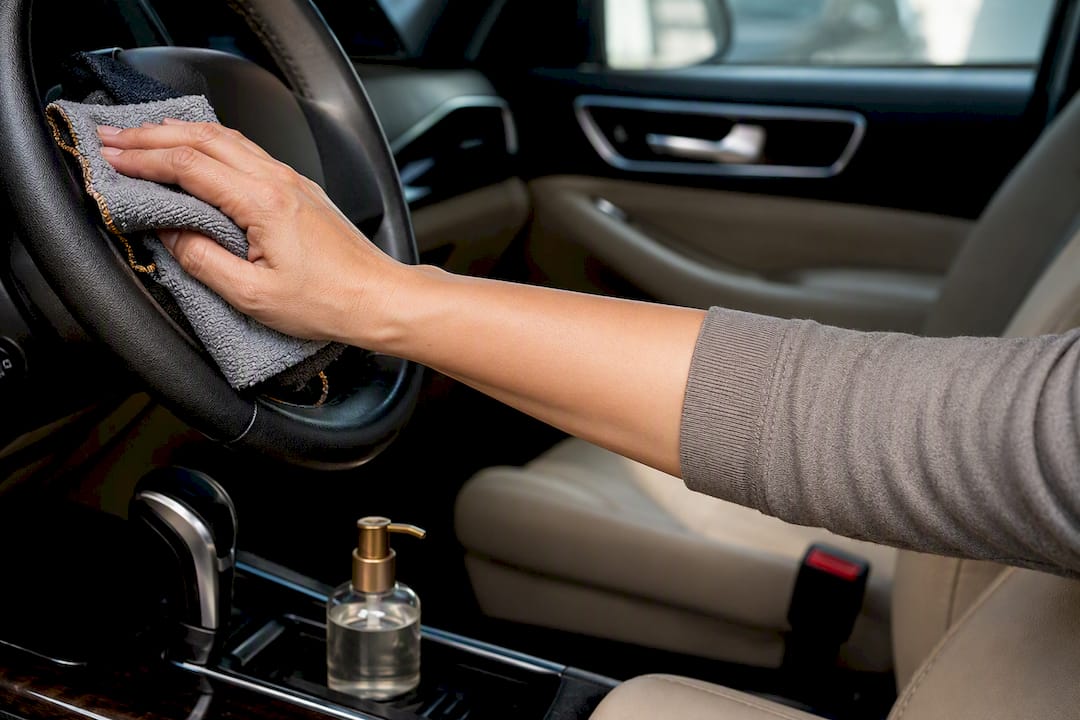
Keep hand sanitizer in the car and offer it before and after the test drive, especially since buyers will be touching the steering wheel, gear selector, and door handles you'll want to keep clean regardless of who's selling. Wipe down high-contact surfaces, wheel, shifter, seat belt buckle, between back-to-back viewings if you're showing the car to multiple buyers in the same day.
If either party is visibly unwell, reschedule. A cough or a fever isn't worth risking over a car sale, and a buyer serious enough to want this car will have no problem meeting a day or two later. Keep windows cracked during test drives for airflow, particularly on longer routes, and consider having masks on hand if a buyer requests one or seems more comfortable wearing one during a shared cabin space.
None of this replaces the identity checks or the ride-along rule. It's a small addition that costs almost nothing and shows a buyer you run a tight, considered process from the first phone call onward.
Shawn's View From the Consignment Floor
The mistake I see most often isn't a dramatic one. It's a seller who skips the phone call because a text conversation "felt fine," or hands over keys because the buyer seemed nice. Nice has nothing to do with it. The buyers who cause problems rarely look the part until it's too late.
A vetted process protects more than your safety. It protects the car's value, since a screened, serious buyer negotiates differently than someone testing the waters with zero intent. We built our own buyer screening and test-drive process around exactly this pattern, because the sellers who skip steps are the ones who call us afterward with a story that started with "I should have checked."
Speed feels good in the moment. Safety is what actually protects a six-figure car and the person selling it.
— Shawn
Why Consignment Removes the Risk Entirely
If everything above sounds like a lot to manage on top of actually selling your car, that's because it is. Screening calls, license checks, route planning, payment verification, none of it is optional for a private sale, and all of it takes real time you might not have.
A consignment service can handle buyer vetting, host viewings and test drives at a professional showroom instead of your driveway, and manage payment and government paperwork to ensure funds clear before any handover happens.
If your time is limited or you're selling a car in the six-figure range where the stakes of a bad viewing are higher, consignment through Bavarian Autohaus puts a professional process between you and every stranger who calls about your listing. Private sale still makes sense for some owners, particularly if you have the time to run every check yourself and manage the process.
Pro Tip: If you value your time more than the small margin you might gain negotiating directly, or if the thought of a stranger test-driving your luxury car alone makes you uneasy, consignment solves both problems at once. Get a free valuation to see what your car could fetch through a managed, insured sale process.
Sources
- 9 Tips on How to Sell a Car Privately | Travelers Insurance
- Checkacar
- 7 Ways to Protect Yourself When Selling a Car Privately - Kelley Blue Book
- Who’s Liable in a Private Car Sale Test Drive Accident? - LegalClarity