
Most aftermarket modifications reduce resale value on the mainstream Singapore market. Buyers, dealers, and appraisers treat non-standard parts as risk, and risk gets priced into every offer you receive. A modified BMW M3 with an aftermarket exhaust and a piggyback ECU tune will almost always fetch less from a general buyer than an identical, unmodified car, even if the work cost you thousands of dollars and made the car objectively better to drive.
The impact depends heavily on what you changed and how well you can prove it.
- Neutral or positive: reversible, professionally installed upgrades with full receipts, especially OEM-style parts or well-known safety and performance brands.
- Almost always negative: irreversible engine or exhaust changes, cut suspension mounts, rewired electronics, and anything without paperwork.
Before you list your car, take three steps: notify your insurer about the modifications, gather every invoice and installation record you have, and get an LTA-Authorised Inspection Centre check if you're unsure whether a part needs formal approval. Reverting high-risk modifications back to stock often costs less than the discount buyers will otherwise demand.
Key Takeaways
Modified cars sell for less on the general market unless owners document the work, disclose it to insurers and LTA, and target buyers who value it.
| Point | Details |
|---|---|
| Disclosure comes first | Notify your insurer and check OneMotoring before listing to avoid claim repudiation and buyer distrust. |
| Documentation reduces discounts | Receipts, dyno sheets, and AIC certificates cut the risk premium appraisers apply to modified cars. |
| Reversibility protects value | Compare the cost to revert against the expected discount before deciding what to keep. |
| Buyer matching changes outcomes | Enthusiast channels and consignment often pay more for documented mods than general trade-in desks. |
| Presentation recovers lost value | Professional detailing and transparent listings close gaps that neglect or vague descriptions create. |
Table of Contents
- How LTA Rules and Insurance Disclosure Affect Modifications Resale Value
- Which Modifications Lower Resale Value the Most?
- Which Upgrades Can Be Neutral or Add Resale Appeal?
- What Should You Do Before Listing a Modified Car for Sale?
- How Do You Price a Modified Car and Negotiate Fairly?
- When Does Consignment Make Sense for a Modified Car?
- What Most Sellers Get Wrong About Modifications and Value
- Sources
How LTA Rules and Insurance Disclosure Affect Modifications Resale Value
Singapore treats vehicle modifications as a regulatory matter, not a personal styling choice, and that shapes how much a modified car is worth on resale. The LTA classifies modifications into three buckets: changes that need no approval, changes that require prior approval, and changes that are simply not allowed on a road-legal vehicle. A buyer who checks a car's history against OneMotoring and finds an undeclared or unapproved modification will walk away, or offer significantly less to cover the risk of failing inspection later.
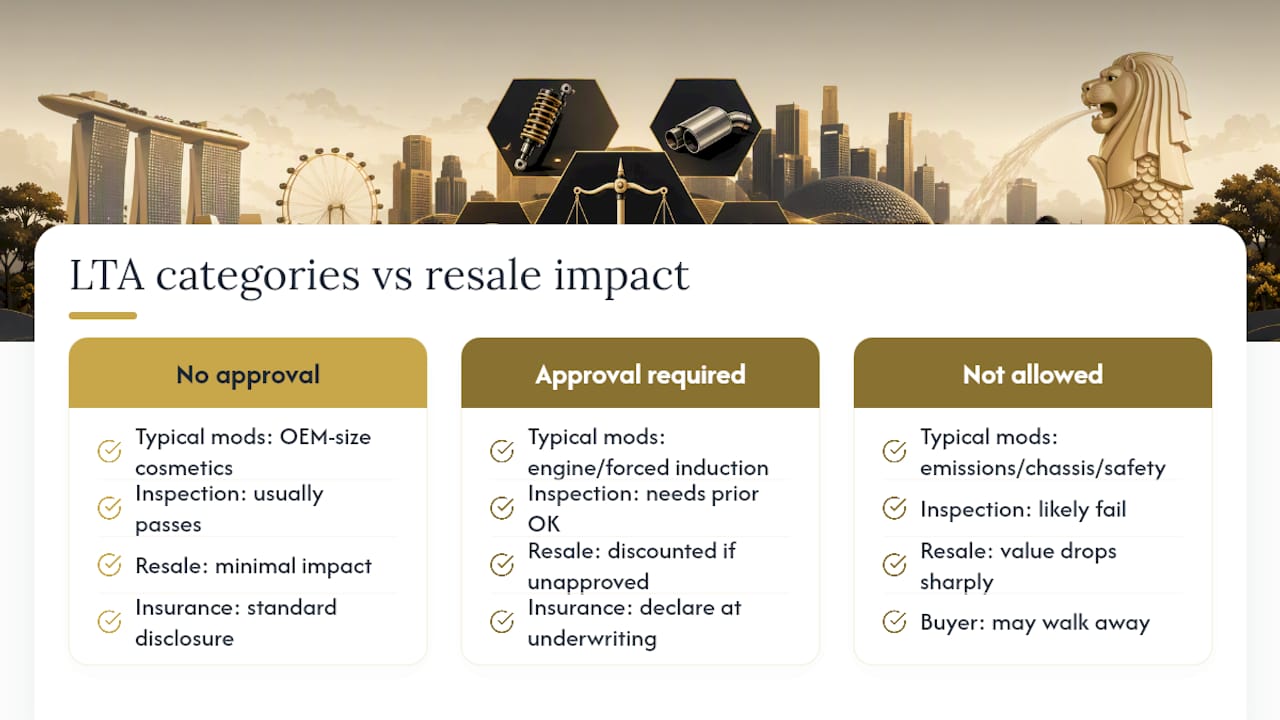
Modifications requiring approval typically include changes to engine capacity, forced induction additions, and alterations to a vehicle's structural specifications. Purely cosmetic swaps, like OEM-spec wheels of the correct size, usually need no approval at all. Anything that alters emissions output, chassis structure, or safety systems in a way LTA hasn't sanctioned falls into the "not allowed" category, and that's the group that tanks resale value fastest, because the car may not legally pass its next inspection.
This is where LTA-Authorised Inspection Centres matter. An AIC inspection verifies that a modification meets LTA's technical standards and issues the paperwork that turns a grey-area upgrade into a documented, approved one. If you've had performance work done and never got it endorsed, that gap alone can trigger a bigger discount than the modification itself would justify.
Insurance compounds the problem. Insurers expect modifications to be declared at the point of underwriting, and failing to disclose them can lead to a repudiated claim, even for an accident the modification had nothing to do with. Buyers who do their homework know this, and a modified car with no clear insurance history around those mods reads as a liability they'd rather not inherit.
Pro Tip: Call your insurer before you list the car, not after an offer comes in. A written acknowledgment that your modifications are on file removes one of the biggest objections a cautious buyer will raise during negotiation.

Three things to do this week: check your car's modification status on OneMotoring, book an AIC inspection for anything ambiguous, and get your insurer's confirmation in writing.
Which Modifications Lower Resale Value the Most?
Some modifications cost you far more in resale discount than they ever added in driving pleasure. Appraisers and buyers apply the steepest markdowns to changes that are irreversible, poorly documented, or that raise doubts about the car's mechanical or legal standing.
- Cosmetic work that hides structural changes. A respray that covers a repaired panel, a vinyl wrap applied over filler work, or drilled body panels for aftermarket trim all raise the same question in a buyer's mind: what's underneath? Once a buyer suspects hidden work, they'll assume the worst and price accordingly.
- Engine and performance modifications that void warranty coverage. ECU remaps, turbo kits installed without matching fuel and cooling upgrades, and aftermarket exhausts that alter emissions are the classic culprits. These changes often void whatever manufacturer warranty remains, and they raise real questions about long-term reliability that a mainstream buyer isn't equipped to evaluate.
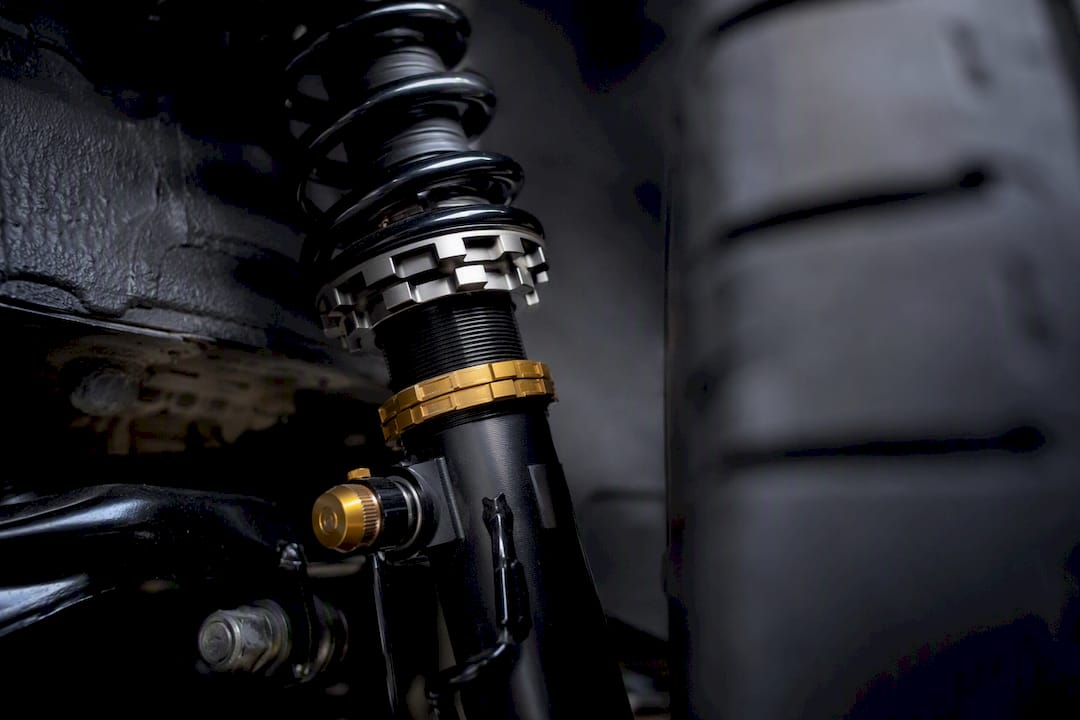
- Suspension and structural alterations. Lowering springs, coilovers with unusual ride heights, and cut or modified mounting points can affect handling in ways that don't show up until an inspection or a hard cornering test. These are also among the modifications most likely to trip up an LTA roadworthiness check.
- Electrical and wiring changes. Aftermarket alarm systems, custom lighting, and rewired accessory circuits create diagnostic uncertainty for the next owner's mechanic. A car with a rat's nest of non-factory wiring behind the dashboard is a hard sell regardless of how well it drives.
- Missing receipts or LTA endorsement. Appraisers discount based on documentation quality as much as on the modification itself. A professionally installed turbo kit with full paperwork and an AIC certificate gets a smaller discount than the identical part installed by an unknown shop with no records.
The common thread across all five categories is uncertainty. A buyer who can't verify what was done, who did it, or whether it's road legal will assume the worst case and negotiate from there, which usually means an offer well below what the car would fetch in stock condition.
Which Upgrades Can Be Neutral or Add Resale Appeal?
Not every modification is a liability. Some upgrades carry little to no discount, and a handful can genuinely widen your buyer pool if you present them correctly.
- OEM dealer options or factory-equivalent upgrades. A higher trim's leather package, factory-style tow bar, or dealer-installed infotainment upgrade, done professionally with receipts, reads as an enhancement rather than a red flag.
- Reversible visual or comfort upgrades. Paint protection film, ceramic coating, and tasteful OEM-plus wheel setups in factory-compatible sizes tend to be resale-neutral, since they don't touch the car's mechanical identity and can be removed if needed.
- Reputable-brand safety and performance parts with full documentation. Reversible, well-documented upgrades from known brands can be neutral or slightly positive among enthusiast buyers, particularly braking upgrades installed by certified shops with test sheets on file.
- Professional detailing before listing. Presentation work isn't a modification, but it's the fastest way to recover value that neglect or cosmetic wear has eroded, and it costs a fraction of what a full respray or paint correction after a bad DIY job would run.
The key variable is who you're selling to. A general buyer on a mainstream platform wants a car that looks stock and drives predictably. An enthusiast buyer on a specialist forum or through a niche consignment channel may actually pay a premium for the right modification, provided you can prove it was done properly. Marketing the same car differently to each audience, with the paperwork to back your claims, is often the difference between a discount and a fair price.
What Should You Do Before Listing a Modified Car for Sale?
Getting a modified car ready for sale is a sequence, not a single decision. Work through it in order and you'll avoid the two most common mistakes: reverting something that didn't need reverting, and listing a car with gaps in its paperwork that spook every serious buyer.
- Decide what to revert. Compare the cost of returning a part to stock against the discount buyers are likely to apply if you leave it modified. A $2,000 lowering kit that scares off 80% of your buyer pool is worth reverting; a $200 set of OEM-style wheel caps almost never is.
- Gather every document you have. Original invoices, dyno sheets from tuning sessions, AIC inspection certificates, LTA endorsement letters, and the contact details of the shop that did the work all reduce the uncertainty a buyer or appraiser has to price in.
- Handle presentation properly. Get professional detailing done before photos, and if you've kept the original parts, photograph them too. A listing that states clearly what was changed, when, and by whom reads as trustworthy rather than evasive.
- Sequence the logistics. If you're removing tint or reinstalling stock components, do it before the first viewing, not after an offer. Store original parts somewhere you can hand them over at the point of sale, since a buyer who receives the stock exhaust with the car feels far more confident about reverting it themselves later.
Pro Tip: Keep a single folder, physical or digital, with every modification receipt, inspection report, and warranty note in one place. Handing a buyer organized paperwork at the first viewing does more to justify your asking price than any amount of verbal reassurance.
Full documentation on transfer requirements and LTA paperwork is worth reviewing separately if you haven't sold a car in Singapore recently, since the transfer process has its own set of steps beyond the modification disclosure itself.
How Do You Price a Modified Car and Negotiate Fairly?
Pricing a modified car starts with a simple framework: list every modification, estimate what it would cost to revert each one to stock, then add a risk premium on top for the uncertainty a buyer is taking on. That risk premium reflects the documentation gaps and revert costs appraisers factor in when they value a modified vehicle against a comparable stock example.
The size of the discount tracks roughly with how invasive and how well documented the modification is.
| Modification type | Typical resale impact |
|---|---|
| Minor visible mods (wheels, tint, badges) with receipts | Small to negligible discount |
| Major engine or exhaust mods, undocumented | Significant discount, narrower buyer pool |
| Structural or safety-related alterations | Steepest discount, may require AIC clearance before sale |
Where you sell matters as much as what you're selling. A heavily modified performance car often does better through enthusiast channels, specialist forums, or a consignment service that can target the right buyer, than it does on a general trade-in desk where the dealer applies a blanket "modified vehicle" penalty regardless of quality. Broader depreciation trends already work against you in Singapore's market; a poorly matched buyer only adds to that gap.
Negotiation comes down to removing doubt. Show receipts, offer to include the original parts, and bring an AIC inspection report if you have one.
- Lead with documentation before price talk starts.
- Offer a firm, slightly discounted "buy now" figure for buyers who want speed over back and forth.
- Be honest about which mods you'd revert if the buyer prefers stock, and price that option separately.
When Does Consignment Make Sense for a Modified Car?
Selling a modified performance car through a general marketplace often means competing for attention from buyers who specifically want a stock example. A consignment approach flips that: it puts your car in front of collectors and enthusiasts who already understand the value of a well-documented modification, rather than treating it as a defect to negotiate against.
Bavarian works this way for owners of BMW, Porsche, Mercedes-Benz, and other performance and luxury vehicles across Singapore. The process covers the parts that usually cost a private seller the most time and the most money on documentation gaps:
- A free valuation that accounts honestly for your modifications, rather than a generic trade-in number.
- Professional photography and video marketing across SgCarMart, Instagram, TikTok, and Facebook, aimed at the buyers most likely to appreciate your specific build.
- Handling of inquiries, viewings, and negotiations, so you're not the one fielding lowball offers from buyers who don't understand what they're looking at.
- Full LTA documentation and transfer-of-ownership paperwork managed on your behalf.
Consignment fees make sense when the uplift from reaching the right buyer, and the time saved not managing viewings yourself, outweighs the commission. For a heavily modified car sitting unsold on a general marketplace for months, that math usually favors consignment. If you're weighing your options, a conversation with Bavarian about your specific build and modification history is a reasonable place to start.
What Most Sellers Get Wrong About Modifications and Value
The common advice, "just revert everything to stock," oversells reversion and undersells documentation. A $200 wheel swap back to stock rims does nothing for your asking price if you've never told your insurer about the coilovers you're keeping. Sellers spend money undoing cosmetic changes that barely moved the needle while ignoring the paperwork gaps that actually drive the biggest discounts.
What the evidence in this guide actually supports is a documentation-first approach. An AIC certificate and a clean insurer disclosure often do more for your final price than a full respray back to factory color. The reversion decision should follow the paperwork audit, not replace it.
The other blind spot is buyer matching. Owners assume every modification is a liability because they're picturing a mainstream trade-in buyer. That's true for a general audience, but it's the wrong audience for a well-built, well-documented performance car. Finding the buyer who wants what you built, rather than converting the car back to what everyone else wants, is usually worth more than the conversion itself.
— Shawn
Sources
Check OneMotoring's modification guidance and insurer disclosure requirements before listing your modified car.
- LTA | Vehicle technologies and modifications - OneMotoring
- Car modifications & insurance impact in Singapore — BudgetDirect
- How car modifications affect resale and appraised value — VinCheckPro
- Do mods affect your car's resale value? — SlashGear