
For Singapore dealers, the highest-impact move right now is running inventory-fed, VIN-level ads across Google Vehicle Ads and Meta Automotive Inventory Ads, backed by marketplace placements on SgCarMart and Carousell. The single most important preparatory task before any campaign goes live: clean your inventory feed and make sure every landing page shows the VIN, price, mileage, and availability without the buyer having to scroll.
Here is what the evidence supports. A Cars.com pilot of VIN-level AI video ads reported a 47% increase in influenced vehicle sales during the initial live campaign window, alongside a 35% lift in website visitors and 45% more influenced foot traffic. Those are early pilot numbers, not a guaranteed baseline, but the direction is consistent with what inventory-led formats do: they match the exact vehicle a buyer was already researching and put it back in front of them at the moment they are deciding.
Before you touch campaign settings, confirm these three things:
- Your inventory feed is live in Google Merchant Center with vehicle data sources enabled and in Meta Catalogs with the Automotive Inventory Ads template
- Every vehicle detail page (VDP) shows dealer name, location, VIN, price, and mileage above the fold, and the price matches the feed exactly
- Your pixel or server-side tagging fires on VDP views, lead form submissions, and phone call clicks so you can measure what actually converts
Key Takeaways
Inventory-fed, VIN-level ads on Google and Meta, backed by SgCarMart and Carousell placements, give Singapore dealers the most reliable path from ad spend to closed sale when feeds are clean and attribution is wired correctly.
| Point | Details |
|---|---|
| Fix feeds first | Clean VINs, matched prices, and removed sold units before any campaign goes live. |
| Prioritize VIN-level ads | Google Vehicle Ads and Meta AIA outperform generic display because they match the exact vehicle a buyer researched. |
| Measure online to offline | Wire CRM lead ingestion, UTMs, and offline conversion imports to reconcile platform claims against actual sales. |
| Respect PDPA | Hash CRM uploads, document consent, and honor opt-out requests before uploading any customer list to Meta or Google. |
| Invest in creative early | VIN-specific walkaround video and professional photos reduce days on lot and improve lead quality across every channel. |
Table of Contents
- Where should you run targeted car ads in Singapore?
- How do Google Vehicle Ads and Performance Max work for Singapore dealers?
- How do Meta Automotive Inventory Ads work for dealerships?
- What does your inventory feed actually need to include?
- What creative actually converts for vehicle ads?
- How should Singapore dealers structure their audiences?
- How do you measure whether your vehicle ads are actually working?
- Step-by-step launch checklist for Singapore dealers
- How Bavarian approaches targeted vehicle ads for luxury consignment
- What most dealers get wrong about targeted vehicle ads
- Sources
Where should you run targeted car ads in Singapore?
Not every channel earns the same budget at every stage. The table below maps each platform to its funnel role and the dealer budget tier where it makes most sense to activate it first.
| Channel | Funnel role | Activate first at |
|---|---|---|
| Google Vehicle Ads / Performance Max | Lower funnel: in-market intent | Any budget |
| Meta Automotive Inventory Ads | Mid funnel: retargeting + prospecting | Small to mid |
| SgCarMart | Discovery: local marketplace | Any budget |
| Carousell | Discovery: local marketplace | Any budget |
| YouTube / CTV | Upper funnel: awareness, luxury reach | Mid to high |
| Email / CRM | Owned: re-engagement | Any budget |
Google search and Vehicle Ads capture buyers who are already searching for a specific make, model, or price range. That lower-funnel intent is the cheapest place to win a lead, so it earns the first dollar of media spend regardless of budget size. Meta's inventory-driven ads work best as a retargeting layer on top of that, pulling back VDP visitors who did not convert, and as a prospecting tool using lookalike audiences built from your best buyers.
SgCarMart and Carousell are not optional for Singapore dealers. Local buyers habitually start their search on these platforms, and a listing there creates a discovery touchpoint that paid search alone cannot replicate. Think of them as always-on inventory exposure, not a campaign you turn on and off.
For dealers with higher budgets, streaming CTV is displacing local cable for premium automotive retailers. First-party identifiers let you target high-intent, local audiences rather than paying for broad cable reach. YouTube pre-roll and connected TV placements make sense once your lower-funnel channels are converting reliably.
Pro Tip: Before enabling Google Vehicle Ads, verify your account's eligibility in Merchant Center. The program is available by default in the US, Canada, Australia, and Japan; Singapore accounts may be in beta, so check your account state and confirm store linking is complete before building campaigns around it.
How do Google Vehicle Ads and Performance Max work for Singapore dealers?
Google Vehicle Ads are a lower-funnel, inventory-driven format. When a buyer searches for something like "used BMW 5 Series Singapore," Google can surface a rich listing showing the vehicle's photo, make, model, year, price, mileage, and your dealership name, all pulled directly from your feed. The buyer clicks through to your VDP, not a generic homepage.
The feed flows like this: your inventory data goes into a vehicle data source inside Google Merchant Center, which then powers either a Performance Max campaign or a Standard Shopping campaign with vehicle data attached.
Performance Max vs. Standard Shopping: which one fits your situation?
| Campaign type | Best for | Trade-off |
|---|---|---|
| Performance Max | Dealers wanting cross-channel automation (Search, Display, YouTube, Maps) | Less granular control over placement and bidding |
| Standard Shopping with vehicle feed | Dealers wanting tighter bid control per vehicle or segment | Narrower reach; no automatic cross-channel expansion |
Performance Max makes sense for most Singapore dealers because it distributes budget across channels automatically and uses Google's signals to find in-market buyers. Standard Shopping is worth testing if you have a small, high-value inventory (say, ten to twenty luxury consignment units) and want to control bids at the vehicle level.
Merchant Center requires a vehicle data source where every offer is a vehicle, and landing pages must match the feed on price, VIN, and availability. Common disapproval reasons include price mismatches between the feed and the VDP, missing VINs on used vehicles, and sold units that remain in the feed.
Steps to get Vehicle Ads live in Singapore:
- Create a vehicle data source in Merchant Center (separate from your standard product feed).
- Upload or sync your inventory with required attributes: VIN, make, model, year, condition, price, mileage (used cars), image URL, availability, and dealer location.
- Confirm landing pages display dealer name, location, VIN, and price above the fold, with no price discrepancy versus the feed.
- Check account eligibility for the Vehicle Ads add-on in Merchant Center; if Singapore is in beta, request access through your Google rep or account dashboard.
- Link your Google Ads account to Merchant Center and create a Performance Max campaign with a vehicle data source attached.
- Set up offline conversion imports so store visits and CRM-matched sales flow back into Google Ads for Smart Bidding to use.
The Cars.com pilot data referenced earlier shows what VIN-level video can add on top of static listings: a 35% increase in website visitors alongside the sales lift. Even without AI-generated video, the feed-first approach consistently outperforms generic display because the ad matches exactly what the buyer was already researching.
How do Meta Automotive Inventory Ads work for dealerships?
Meta's Automotive Inventory Ads (AIA) pull from your catalog feed to generate dynamic, VIN-level ads automatically. Instead of building a separate creative for each vehicle, you upload the feed once, and Meta assembles the ad using the vehicle's photos, price, and attributes. Feed quality, catalog completeness, and pixel or server-side events materially affect performance, so the setup work is mostly on the data side, not the creative side.
Setup sequence for Singapore dealers:
- Create a catalog in Meta Business Manager and select the Automotive template.
- Upload your inventory feed (CSV, XML, or via a feed URL that auto-refreshes) with required fields: VIN, make, model, year, price, mileage, condition, image URLs, availability, and dealer location.
- Install the Meta pixel on your website and set up server-side events via the Conversions API for VDP views, lead form submissions, and calls.
- Create a Catalog Sales campaign and select your automotive catalog as the product set.
- Build your audience layers: start with VDP retargeting (7–14 days), then add CRM custom audiences, then 1–3% lookalikes from your highest-value buyers.
- For Marketplace placements, write human-authored listings rather than relying on feed-only automation; manually written descriptions consistently outperform templated feed copy in Marketplace.
Audience tactics that work on Meta
- VDP retargeting (7–14 days): buyers who viewed a specific VDP are the hottest segment. Serve them the exact vehicle they viewed.
- CRM custom audiences: upload your service customers, past buyers, and trade-in inquiries. These audiences convert at higher rates because they already know your dealership.
- 1–3% lookalikes: build from your highest-value closed deals, not all leads. A lookalike from ten luxury buyers outperforms one built from five hundred unqualified form fills.
- Life-event targeting: new residents, recent movers, and life-event signals (new job, marriage) correlate with car purchase intent in Singapore's demographic data.
Pro Tip: Image EXIF data affects Meta's feed scoring. Photos shot on a professional camera with clean metadata score higher than screenshots or compressed images. Run your feed images through a quality check before uploading, and refresh creative every 4–6 weeks to avoid ad fatigue.
Facebook ads for car sales perform best when the retargeting window is tight and the creative is vehicle-specific. A generic "visit our showroom" ad to a cold audience rarely justifies the spend. Instant forms work well for finance inquiries and trade-in valuations, where the buyer wants a quick answer without leaving Facebook.
What does your inventory feed actually need to include?
Feed errors are the most common reason vehicle ad campaigns underperform or get disapproved. The required attributes differ slightly by platform but the core set is consistent.
Landing-page rules are strict on both platforms. The VDP must show the dealer name, location, price, and VIN without the buyer scrolling. If the price on the page differs from the feed by even a small amount, Google will disapprove the listing. Sold vehicles left in the feed waste budget and erode trust.
For feed management, most Singapore dealers benefit from a feed service provider that syncs inventory automatically rather than managing manual uploads. Automated sync reduces the lag between a vehicle selling and the ad disappearing, which is the single biggest source of wasted spend in dealer campaigns.
Pro Tip: *Run a feed validation pass before launch using Google Merchant Center's diagnostics tab and Meta's Catalog Manager. Both tools flag missing attributes, image quality issues, and price mismatches before they cause disapprovals.
What creative actually converts for vehicle ads?
The answer is simpler than most agencies make it sound: show the actual car, at the actual price, with a clear next step. Every layer of abstraction between the creative and the specific vehicle reduces conversion.
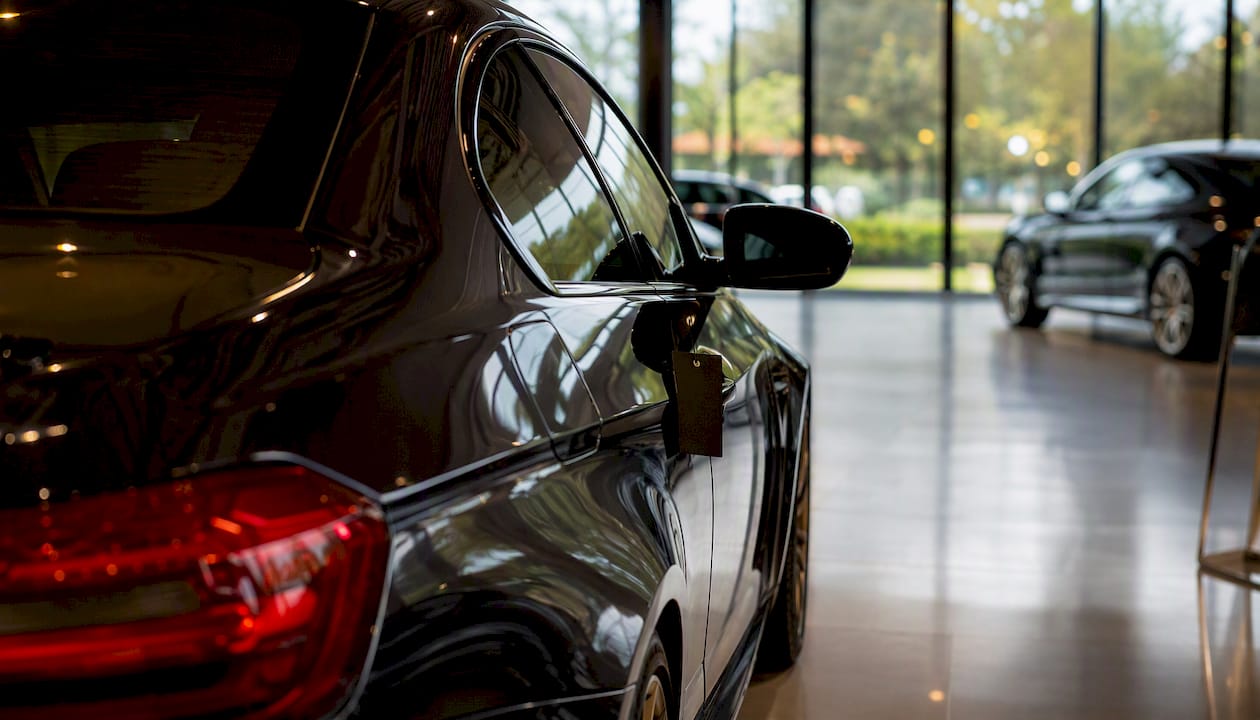
For photo galleries, each VDP needs a minimum of eight to twelve images covering exterior angles (front, rear, three-quarter), interior (dashboard, seats, infotainment), and any condition-relevant details (service records visible, tire condition, notable features). Professional photography standards for Singapore performance cars matter more for luxury consignment than for volume dealers because the buyer is spending S$150,000 or more and will scrutinize every image.
High-impact creative formats to test:
- 30–60 second walkaround video: shoot in one continuous take, exterior first, then interior, then engine bay. Natural light or a clean showroom background. No music that drowns out the presenter.
- Short-form social clips (15–30 seconds): cut from the walkaround for Instagram Reels, TikTok, and Facebook Stories. Lead with the most visually striking angle in the first two seconds.
- Payment overlay creative: show the monthly finance figure prominently alongside the vehicle image. Buyers anchored to a monthly payment convert faster than those anchored to the total price.
- Virtual test-drive clips: a moving POV shot from the driver's seat, even thirty seconds, builds emotional connection that static photos cannot.
For car video marketing, the production standard matters less than the authenticity. A well-lit walkaround shot on a recent iPhone outperforms a heavily edited brand video that does not show the actual car being sold.
Numbered A/B tests worth running in sequence:
- Studio background vs. outdoor/lifestyle setting for the hero image (test click-through rate).
- Price-first creative vs. payment-first creative (test lead form completion rate).
- CTA "Book a viewing" vs. "Get instant valuation" (test which segment each attracts).
- 15-second clip vs. 45-second clip for retargeting (test view-through rate and VDP clicks).
Keep each test running for at least two weeks or until you have 200+ impressions per variant. Automotive purchase cycles are long, so under-powered tests produce misleading results.
Statista's device distribution data for automotive website traffic shows meaningful differences between desktop and mobile usage. Mobile-first video and fast-loading VDPs are not optional for Singapore buyers who research on their phones and convert on desktop.
How should Singapore dealers structure their audiences?
Singapore's geography simplifies some targeting decisions and complicates others. The island is roughly 50 km across, so radius targeting beyond 25 km covers the entire market. What matters more is behavioral and demographic segmentation, not geography.
For geo-targeting, neighborhood-level targeting in Singapore can be useful for luxury dealers near specific enclaves (Bukit Timah, Tanglin, Sentosa Cove) where high-net-worth buyers concentrate. Test neighborhood-level versus island-wide targeting separately; the CPL difference often justifies the narrower reach.
Retargeting windows for active VDP visitors should stay at 7–14 days. Beyond that, the buyer has either purchased elsewhere or cooled significantly. Broader site visitors (homepage, inventory page) warrant a 30-day window. CRM-based audiences can run longer because the relationship already exists.
PDPA compliance checklist for Singapore dealers: obtain explicit consent before uploading CRM data to Meta or Google as a custom audience. Your privacy policy must disclose that customer data may be used for advertising purposes. Use hashed email uploads (SHA-256) rather than plain-text data. Retain records of consent and honor opt-out requests within the timeframes the Personal Data Protection Act requires. When in doubt, consult a PDPA-registered data protection officer before uploading any customer list.
Pro Tip: Build a "conquest retargeting" audience from buyers who visited your VDPs but whose CRM records show they purchased elsewhere. Serve them a trade-in or upgrade offer 12–18 months after their estimated purchase date. Singapore's COE cycle means many buyers are ready to upgrade within three years.
How do you measure whether your vehicle ads are actually working?
The KPIs that matter for dealer campaigns run from online signals to offline outcomes. Tracking only online leads misses the majority of the value, because most Singapore car sales close in person.
KPI stack to track weekly:
- VDP views per vehicle (flag units with low views for creative refresh)
- Lead form fills and call clicks (cost per lead by channel)
- Booked viewings (requires CRM integration)
- Influenced store visits (Google Store Visits where available; Meta offline events)
- Influenced sales (CRM match against ad-exposed audiences)
- Cost per influenced sale (the metric that actually justifies budget)
- Days on lot per vehicle (cross-reference with ad spend per unit)
For tracking setup, the minimum viable stack is: Meta pixel plus Conversions API for server-side redundancy, Google tag with enhanced conversions, UTM parameters on every ad URL (source / medium / campaign / content / term), and CRM lead ingestion that captures the UTM values at the point of form fill.
Offline conversion measurement works by matching your CRM's closed deals against the click IDs or hashed emails captured during the ad exposure window. Google's offline conversion import and Meta's offline events API both support this. Run the match monthly, not just at campaign end, so Smart Bidding has fresh signal to optimize against.
Top-performing dealers run integrated programs across search, social, video, email, and local SEO. The dealers who struggle with attribution are usually the ones running channels in silos with no shared UTM convention and no CRM discipline.
Pro Tip: Set a weekly 30-minute dashboard review covering VDP views, CPL by channel, and days-on-lot by vehicle. Monthly, reconcile platform-reported conversions against CRM closed deals. The gap between what Meta claims as conversions and what your CRM records as sales is your attribution leakage, and closing it is worth more than most creative optimizations.
Step-by-step launch checklist for Singapore dealers
Running your first inventory-led campaign is a sequenced process. Skipping steps early creates problems that are expensive to fix later.
- Feed cleanup (Week 1, 3–5 days): audit your inventory data for missing VINs, price inconsistencies, low-resolution images, and sold units. Fix or remove before building any feed.
- VDP fixes (Week 1, 2–3 days): confirm every VDP shows VIN, price, mileage, and dealer location above the fold. Match prices exactly to what you plan to put in the feed.
- Merchant Center setup (Week 1–2, 1–2 days): create a vehicle data source, upload the feed, and run the diagnostics report. Resolve all errors before enabling Vehicle Ads.
- Meta Catalog sync (Week 2, 1–2 days): create the automotive catalog, connect the feed URL for auto-refresh, install the pixel and Conversions API, and validate events in Meta's Events Manager.
- Creative production (Week 2–3, 3–7 days): shoot walkaround videos and photo galleries for your top ten to fifteen units. Prioritize vehicles that have been on lot the longest or carry the highest margin.
- Small-scale test campaigns (Week 3–4): launch with a conservative daily budget. Start with VDP retargeting on Meta and a Performance Max campaign on Google. Do not scale until you have two weeks of conversion data.
- Marketplace listings (Week 3, ongoing): publish human-authored listings on SgCarMart and Carousell for every active unit. Refresh listing copy and lead photos every two to three weeks.
- Scale and optimize (Week 5+): increase budgets on campaigns with a CPL below your target. Add lookalike audiences on Meta. Expand to YouTube or CTV if budget allows.
Budget drivers to plan for: feed provider fees for automated sync (varies by provider and inventory size), creative production for video walkarounds, daily media spend (start at S$30–50/day per active campaign for a small dealer; mid-size dealers typically run S$150–300/day across channels), and agency or tech setup fees if you are outsourcing feed management or pixel work.
Pro Tip: The most common launch blocker is a price mismatch between the feed and the VDP. Before submitting to Merchant Center or Meta Catalog, run a spot-check on five to ten random listings: open the VDP and compare the displayed price to the feed value. One mismatch can trigger a batch disapproval.
How Bavarian approaches targeted vehicle ads for luxury consignment
Bavarian's process at Gillman Barracks illustrates what inventory-led marketing looks like when applied to high-end consignment vehicles rather than volume dealership stock.
The flow starts at intake. When a vehicle comes in for consignment, the first step is pre-shoot preparation: detailing, any minor reconditioning, and a review of the car's service history and documentation. Clean, well-documented cars photograph better and generate higher-quality leads because buyers have fewer objections before the viewing.

Photography and video production follow immediately. Bavarian produces VIN-specific walkaround videos and photo galleries for each consignment unit, prioritizing the angles and details that matter most to buyers of BMW, Porsche, Ferrari, and similar marques: engine bay condition, interior wear, wheel condition, and any modifications. Short-form clips cut from these walkarounds go to Instagram, TikTok, and Facebook, where they function as both organic content and paid creative assets.
What the Bavarian process demonstrates in practice:
- VIN-specific creative (not generic brand content) drives higher VDP engagement because buyers recognize the exact car they are considering
- Cross-posting the same asset across SgCarMart, Carousell, Instagram, and Facebook multiplies reach without multiplying production cost
- Removing sold units from all feeds and listings within 24 hours prevents wasted ad spend and buyer frustration
- Responding to leads within the first hour materially improves conversion rates; the consignment model means Bavarian handles all inquiries directly, removing the lag that plagues multi-layer dealer setups
- Targeting wealthy, high-intent buyers requires storytelling across channels, not just a price listing; the Gillman Barracks showroom setting and the brand's editorial-quality content signal the premium experience before the buyer arrives
For sellers considering luxury car consignment in Singapore, the marketing infrastructure matters as much as the asking price. A car listed with professional creative and targeted distribution sells faster and closer to asking price than the same car listed with phone photos and a generic description.
Pro Tip: For luxury consignment specifically, the first 48 hours after a listing goes live are the highest-intent window. Schedule your paid retargeting to serve the VIN-specific ad to anyone who views the VDP within the first 72 hours, and make sure your response time to those leads is under 60 minutes. The buyer who views a S$300,000 Porsche at 9 PM on a Tuesday is not going to wait until the next morning.
What most dealers get wrong about targeted vehicle ads
The conventional advice on digital car advertising focuses heavily on platform selection: which channel to use, which ad format to pick, which audience to target. That framing puts the emphasis in the wrong place. The channel is almost never the constraint. The feed is.
Every dealer I have seen struggle with Google Vehicle Ads or Meta AIA had the same root problem: inventory data that was incomplete, inconsistent, or stale. Missing VINs, prices that did not match the VDP, sold units still running ads, photos that looked like they were taken in a parking garage at dusk. The platforms are sophisticated enough to find buyers. They cannot compensate for bad data.
The second mistake is treating online leads as the primary KPI. Singapore car sales close offline, in a showroom, after a test drive. A campaign that generates fifty form fills but zero showroom visits is not performing, regardless of what the platform dashboard says. The dealers who win are the ones who wire their CRM to their ad platforms, import offline conversions, and optimize toward influenced sales rather than lead volume.
The third thing most guides understate is the value of speed. A buyer who views a S$200,000 Mercedes-Benz VDP at 8 PM and submits a contact form is in a high-intent window that closes fast. If your response time is four hours, you have probably lost them to a competitor who called back in twenty minutes. The targeting and creative get the buyer to the form. What happens next is a sales operations problem, not a marketing problem, and it matters just as much.
For luxury and consignment dealers specifically, the platforms to sell cars in Singapore matter less than the quality of what you put on them. A clean feed, professional creative, and a fast follow-up process will outperform a sophisticated multi-channel setup with poor data and slow response times every time.
Sources
These are the primary references to validate your setup and troubleshoot platform-specific issues:
- Google Ads help: Vehicle ads — how they work and requirements
- Facebook Business Help: Automotive Inventory ads — basics and best practices
- Cars.com's new first-of-its-kind AI video solution turns every vehicle into high-intent sales engine (PR Newswire)
- Car dealership advertising: A practical guide to smarter ad spend in 2026 | Auto Shop Digital