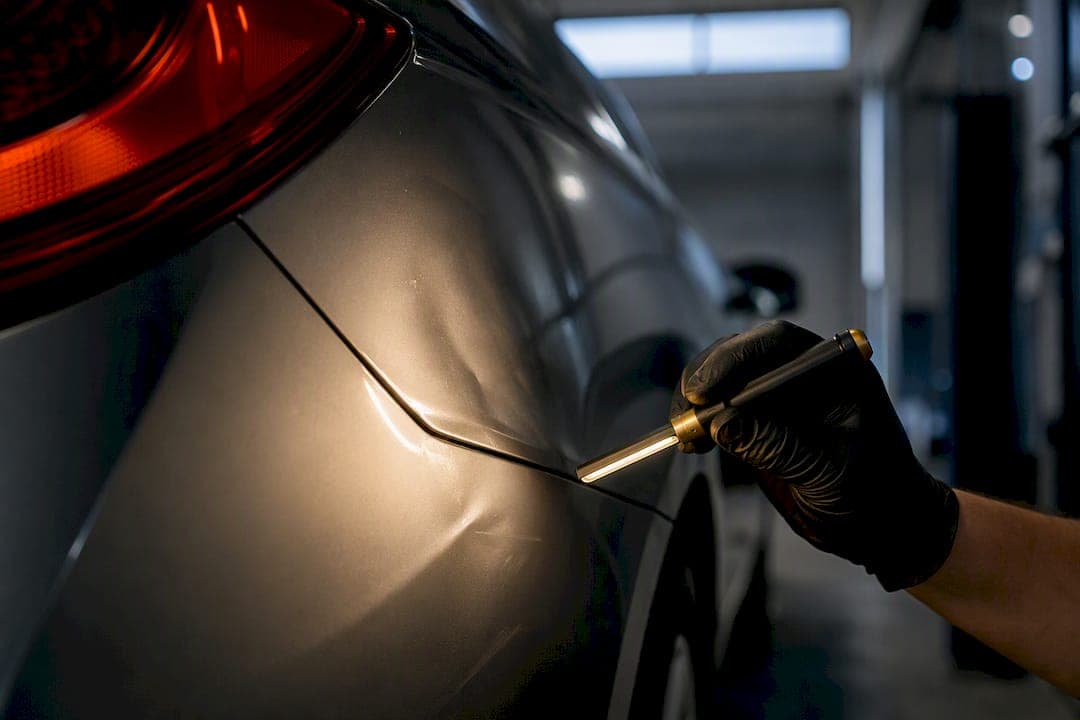
No single Singapore database gives you a car's complete accident history. The closest thing is GIA's Vehicle Accident Report History (VARH), which covers six years of filed claims and costs a fee of S$90 plus GST, but only the current registered owner can buy it. LTA OneMotoring fills in ownership and COE data, not crash records. Before you buy or sell an accident-affected car, get the VARH pulled, book a professional pre-purchase inspection, and if the car is a premium model, talk to a consignment specialist who can present its repair history transparently.
TL;DR:
- The GIA VARH report costs S$90 plus GST and only the current vehicle owner can request it, making it essential for buyers to ask sellers for recent copies before purchase.
- Visual inspections focusing on panel gaps, paint consistency, underseal, and internal faults can reveal hidden or undocumented accident repairs that official reports may not show.
- Professional inspections by independent workshops or graded reports from STA and VICOM can detect structural damage, suspension issues, or hidden repairs that visual checks miss, usually costing between SGD 150 and 300.
- Structural or frame repairs significantly reduce a car’s resale value and may lead to higher insurance premiums, but proper documentation like repair invoices and certified inspections can mitigate these effects.
- Selling a car with accident history is most profitable when properly presented through professional photos, detailed inspection reports, and transparent documentation, especially for high-end or performance vehicles.
Table of Contents
- Official Records and Reports You Can Use in Singapore
- Visual and DIY Checks to Spot Hidden Accident Repairs
- Professional Inspections and Evaluation Reports: Scope and Cost
- How Accident History Affects Resale Value and Insurance
- Selling Options for Accident-Damaged Cars in Singapore
- Selling a Repaired Luxury Car Is a Presentation Problem, Not Just a Price Problem
- How Bavarian Handles Consignment for Cars With Accident History
- Where to Verify These Details Yourself
- Sources
- FAQ
Official Records and Reports You Can Use in Singapore
Three sources matter here, and none of them alone gives you the full picture.
The GIA Vehicle Accident Report History (VARH), accessed through the GIA Easy Accident Reporting System (GEARS), lists dates of accident reports filed over the past six years. It costs S$90 plus prevailing GST and only the vehicle's current registered owner can request it. If you're buying, that means you'll need to ask the seller to pull the report before you commit, not after.
LTA OneMotoring covers different ground entirely. It shows ownership transfer history, COE details, and chassis or engine numbers, but it does not publish accident or insurer claim records. Treat it as a way to confirm the car is legitimately owned and roadworthy on paper, not a crash-history tool.
Insurer letters are the third option, and they're inconsistent. Some insurers will confirm to a registered owner whether a claim was filed on a policy, but the process, cost, and willingness to disclose varies company to company.
If you're viewing a car, ask for:
- A recent VARH printout (or ask the seller to request one on the spot)
- The LTA vehicle particulars printout showing ownership duration
- Any insurer correspondence confirming past claims, if the seller has it
- Original repair invoices, if repairs were done
A seller who hesitates on all four is telling you something.
Visual and DIY Checks to Spot Hidden Accident Repairs
Cash repairs to protect a No Claims Discount are common in Singapore, which means plenty of collision work never shows up on any official report. That's exactly why a walk-around inspection still matters, even with a clean VARH in hand.
- Check panel gaps side to side. Stand at the front and rear of the car and compare the gap between the bonnet and fenders on each side, then the boot lid and rear quarter panels. Uneven gaps suggest a panel was removed and refitted.
- Open every door and inspect the jambs. Factory paint has a consistent texture and orange-peel finish. A respray usually looks smoother or shows overspray on rubber seals and hinges.
- Lift the boot carpet. Fresh black underseal or sealant in the spare wheel well is one of the most reliable signs of rear-end repair work.
- Look underneath with a torch if you can. Fresh weld beads, mismatched underseal patches, or a subframe that looks newer than the rest of the chassis all point to structural work.
- Check the instrument cluster and run an OBD scan. Airbag warning lights, fault codes tied to sensors, or a cluster that looks like it was swapped are red flags worth pursuing further.
- Walk around the tires. Uneven wear from side to side can indicate suspension or alignment damage that was never properly corrected.
Do this in daylight, never under a workshop's fluorescent lighting, which flattens paint differences you'd otherwise spot instantly. A careful check of door jambs and seams after a light clean often reveals overspray that dirt and grime were hiding.
Pro Tip: Bring a flashlight and crouch at bumper height when comparing panel gaps. Most buyers check gaps standing up, which is exactly the angle where small misalignments are hardest to see.
Professional Inspections and Evaluation Reports: Scope and Cost
A visual check narrows your suspicion. A professional inspection confirms it.
An independent workshop inspection puts the car on a hoist to check the underbody, runs an OBD diagnostic scan, tests the suspension and brakes, and usually includes a road test. This typically costs between SGD 150 and 300, a small amount against the price of the car itself.
For a higher standard of scrutiny, STA and VICOM evaluation reports are the names to know in Singapore. These providers issue graded assessments that confirm structural integrity, and a graded STA or VICOM report functions as a trust signal buyers and insurers both recognize.
Inspections catch things a walk-around never will:
- Weld beads or subframe repairs hidden by underseal
- Suspension geometry that's slightly off after a collision
- Fault codes tied to airbag deployment history
- Fluid leaks or component wear masked by a recent detail job
If a private repair is small relative to what's typically at stake in a used-car purchase in Singapore, the inspection cost is minor by comparison. If the seller refuses to allow an inspection or won't let you take the car to your own workshop, walk away. There's rarely a good reason to say no unless something's being hidden.
How Accident History Affects Resale Value and Insurance
Not all accident history costs the same amount. A reported claim that shows up on VARH is one problem. An unreported private repair that surfaces during inspection is a different, often bigger, problem, because it signals the seller wasn't upfront about it.
The type of repair matters more than the fact of the repair. Cosmetic work, a resprayed bumper, a replaced door panel, tends to have a modest effect on price once it's documented. Structural or frame repairs are a different story. Chassis straightening after a serious collision commonly reduces long-term crash performance and buyers, correctly, discount heavily for it.
Documentation narrows that gap. A car with:
- A VICOM or STA report confirming structural integrity post-repair
- Original repair invoices with parts and labor itemized
- Before-and-after photos of the repair work
- Service history showing consistent maintenance since
will hold value far better than one with the same repair and no paperwork. Verified inspection reports and clear receipts convert buyer uncertainty into evidence, which is often the single biggest lever a seller has after an accident.
On the insurance side, structurally repaired vehicles sometimes face higher premiums or narrower coverage options at renewal, and some insurers are simply less interested in underwriting them. That's worth factoring in before you decide whether to fix a car properly or sell it as is.
Selling Options for Accident-Damaged Cars in Singapore
The right route depends on how bad the damage was, how much documentation you have, and whether speed or price matters more.
Private sale usually nets the highest price, but you carry the disclosure risk yourself, and there's no Lemon Law protection in a private-to-private transaction if the buyer later disputes what you told them.
Dealer trade-in is fast and low-effort. You'll typically get less than a private sale would bring, because the dealer prices in their own resale margin and risk.
Salvage or wrecker sale makes sense only when the car is a total loss or the damage is severe enough that a normal sale isn't realistic. Salvage buyers and exporters will move the car quickly, but the payout sits well below market resale value.
Consignment sits between private sale and dealer trade-in for owners who want a private-sale price without doing the legwork themselves. This is where Bavarian's model applies specifically to higher-end and performance cars: professional presentation, targeted marketing, and full handling of viewings and LTA paperwork, aimed at reaching buyers who'll pay for a well-documented car.
| Route | Speed | Typical net price | Disclosure risk |
|---|---|---|---|
| Private sale | Slow | Highest | Falls entirely on seller |
| Dealer trade-in | Fast | Lower | Falls on dealer |
| Salvage/wrecker | Fastest | Lowest | Minimal |
| Consignment | Moderate | High | Managed by consignment service |
Before listing anywhere, gather your VARH printout, any inspection report, LTA ownership records, service history, and clear photos of both the car and any repair work. If your car has modifications alongside repair history, disclose both together rather than letting a buyer discover one during inspection.
Selling a Repaired Luxury Car Is a Presentation Problem, Not Just a Price Problem
Most owners assume an accident history caps their car's price and there's nothing to be done about it. That's only half true. The bigger issue is usually that the car looks undocumented, not that it was repaired. A well-repaired car with a graded STA or VICOM report and clean photography routinely outperforms an unrepaired but poorly presented one, because buyers of premium cars are paying for certainty as much as they're paying for the car itself. Consignment tends to beat a rushed private sale specifically because it buys you time to build that case properly.
— Shawn
How Bavarian Handles Consignment for Cars With Accident History
If your car has an accident in its past, the honest fix isn't hiding it. It's presenting it well enough that buyers trust the price. Some consignment providers offer an alternative to a rushed dealer trade-in for owners of accident-repaired high-end and performance cars in Singapore, featuring professional photography, viral-style video marketing, and listings on popular platforms like SgCarMart and social media to reach serious buyers.
Before you consign, pull your VARH report, gather any insurer correspondence, and collect your STA or VICOM inspection report along with service and repair receipts. Consignment services typically handle valuation, viewings, negotiation, LTA documentation, and transfer of ownership, often with a no-sale-no-fee arrangement. If you're weighing whether to sell now or wait, start with a free valuation request and see what your car is actually worth with proper documentation behind it.
Where to Verify These Details Yourself
- Request a VARH report through GIA's GEARS system for accident dates over the past six years
- Check ownership, COE, and chassis details on LTA OneMotoring
- Book an evaluation with VICOM or STA, or an independent workshop, before committing to a purchase
Sources
- Used Car Inspection Singapore: Spot Accident Damage — The Right Workshop
- Checking for Accident Damage on a Car: The Ultimate 2026 Singapore Inspection Guide — Carz World
FAQ
Can I check a car's full accident history in Singapore for free?
No. The GIA VARH report costs S$90 plus GST and covers six years of filed claims, and only the current registered owner can purchase it.
Does LTA OneMotoring show if a car was in an accident?
No. LTA OneMotoring shows ownership history, COE, and chassis or engine numbers, but it does not publish accident or insurance claim records.
How much does a pre-purchase inspection cost in Singapore?
Independent workshop inspections typically cost between SGD 150 and 300 and include an underbody hoist check, OBD scan, and road test.
Does a repaired accident car always sell for less?
Not always by the same margin. Cosmetic repairs with proper documentation see a smaller discount, while structural or frame repairs typically cause a much larger price reduction.
Should I use a consignment service to sell a car with accident history?
For higher-value cars, consignment services like Bavarian can help present repair documentation and inspection reports professionally, which often recovers value that a rushed private sale or trade-in would lose.